HIGHLIGHTS
- Novo has moved to the second stage and is progressing exploration at the Tibooburra Gold Project in NSW through a Farm-in/JV with Manhattan Gold Corporation Limited (ASX: MHC).
- Novo will commence a ~2,700 m RC program at Tibooburra, with drilling to occur at the Clone and Pioneer South prospects, post receipt of all regulatory and land holder approvals and anticipated to commence in late Q3 2026.
- Step out drilling at the Clone prospect will target a northern extension to open, shallowly plunging, high-grade gold mineralisation confirmed during Novo’s 2025 drill campaign that reported results up to 12 m @ 5.90 g/t Au from 16 m, including 5 m @ 13.74 g/t Au from 23 m in TBR0001.1
- First-pass drill testing at the Pioneer South prospect will target an undrilled ~600 m continuous trend of outcropping gold-quartz reefs characterised by historic workings and previously reported rock-chip assays up to 19.8 g/t Au.2.
- Pioneer South forms part of the broader Pioneer prospect defined by a > 2 km long, +30 ppb coherent Au-in-soil anomaly with historic workings along multiple trends. Previously reported results from limited drilling at Pioneer include 5 m @ 6.96 g/t Au from 199 m, including 1 m @ 33.9 g/t Au from 199 m in PN00022, collared along trend and approximately 300 m north of the planned program.
- Pioneer and Clone occur within a NW-trending, crustal-scale (> 30 km), fault-controlled, alteration corridor that represents one of several gold-prospective, mineralised corridors at Tibooburra.
- Regional streams and targeted soils, mapping and rock chip sampling to continue through H2 2026, designed to identify additional targets for potential follow up drilling.
- Novo, Manhattan Gold Corporation Limited and its wholly owned subsidiary Awati Resources Pty Ltd have now signed the formal Joint Venture and Option Agreement as well as the Minerals Coordination Deed contemplated by the Term Sheet entered on 13 December 2024.
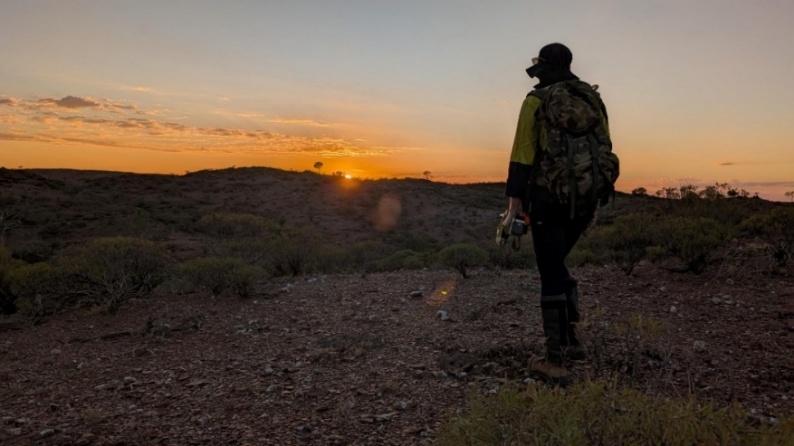
Overlooking Tibooburra Gold Project, Clone Prospect
PERTH, Australia, July 29, 2026 (GLOBE NEWSWIRE) -- Novo Resources Corp. (Novo or the Company) (ASX: NVO) (TSX: NVO) (OTCQB: NSRPF) is pleased to provide an update on the planned H2 2026 exploration programs at the Tibooburra Gold Project (Tibooburra), NSW.
A ~2,700 m RC drilling program is scheduled to commence at Tibooburra in late Q3 2026 post receipt of all regulatory and land holder approvals.
Drilling is planned to test the Clone (~1,700 m) and Pioneer South prospects (~1,000 m).
Ongoing regional stream sediment sampling, coupled with targeted mapping and surface sampling throughout H2 2026, are designed to generate new gold-anomalous zones, grow the target pipeline, and help prioritise those targets for future exploration drilling.
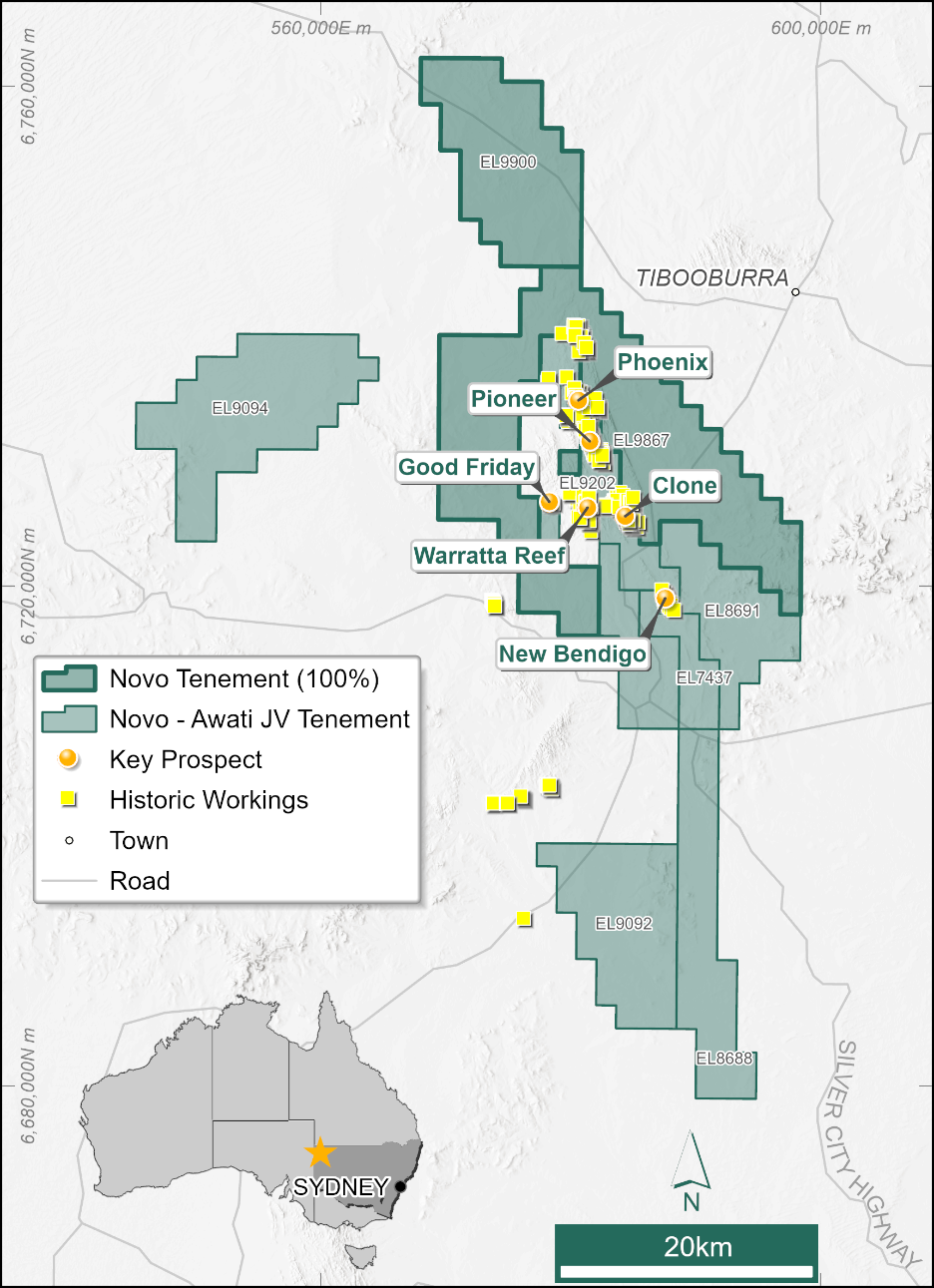
Figure 1: Location, tenure and key prospects at Tibooburra, NSW. Tenements EL9867 and EL9900 are newly granted (and 100% owned by Novo). All other tenements belong to the Tibooburra Gold Project Farm-In JV with Manhattan Gold Corporation and Awati Resources Pty Ltd.
FORMAL AGREEMENTS FINALISED
On 13 December 2024 (and as announced to ASX), Novo, Manhattan Gold Corporation Limited (Manhattan) and Awati Resources Pty Ltd (Awati) entered into a binding term sheet (Term Sheet) setting out the terms of a proposed joint venture in relation to 6 tenements (all of which are exploration licences) located in the Albert Goldfields in northwestern NSW. Awati is a subsidiary of Manhattan.
The parties have now signed the formal Joint Venture and Option Agreement as well as the Minerals Coordination Deed contemplated by the Term Sheet (Agreements). Under these Agreements, Novo will issue 1,500,000 Common Shares to Awati which will be subject to a four-month hold period pursuant to Canadian securities laws.
In addition, Novo is required to spend a total of A$1.5 million to exercise its option to form a 70/30 unincorporated joint venture with Awati relating to precious metals and base metals on the tenements (JV Minerals Rights), with all other mineral rights (Reserved Rights) remaining with Awati. Of that commitment, Novo has already spent A$1.31 million (C$1.29 million) as of 30 June 2026. Awati is free carried until the completion of a bankable feasibility study at Tibooburra and, at completion of that phase of the arrangement, Novo will have the option to terminate the Agreements or exercise its option to form the joint venture. If the option is exercised, Novo will obtain a 70% interest in the tenements. The Minerals Coordination Deed will regulate the rights of the joint venture in respect of the JV Minerals Rights and the rights of Awati in respect of the Reserved Rights.
TIBOOBURRA GOLD PROJECT
Pioneer Prospect
The Pioneer prospect (Figure 1) is defined by a > 2 km long +30 ppb, robust gold-in-soil anomaly2, multiple lines of historic workings, shafts up to 76 m depth, and a historic processing hub centrally located within the prospect area (Figure 2).
Pioneer sits within a regional NNW-trending fault-controlled alteration corridor hosted in a poly-deformed, tight to isoclinal folded and intensely sericite and carbonate altered siltstone and shale sequence.
Historic workings at Pioneer targeted a series of parallel, N to NNW-striking gold-bearing quartz reefs. The quartz reefs are associated with narrow and continuous, steeply west dipping structures, that both cut and are ~10-15° oblique to the regional NNW-trending foliation and isoclinal folded stratigraphy.
Gold-bearing quartz reefs at Pioneer are typically < 1 m in width, high-grade, and can be traced individually for tens to hundreds of metres. Footwall and/or hanging-wall mineralisation zones adjacent to the quartz reefs can reach thicknesses of 2 m to 5 m.
Previous, broad spaced drill traverses in the central and northern parts of the Pioneer Prospect have returned the following, previously reported peak intercepts2:
- 5 m @ 6.96 g/t Au from 199 m; including 1 m @ 33.90 g/t Au (PN0002)
- 2 m @ 14.74 g/t Au (TP003)
- 3.8 m @ 1.90 g/t Au from 69 m (AWPN02A)
Structural data from mapping and orientated diamond core at Pioneer in conjunction with 3D modelling of historic mine workings and drill hole data indicate a moderate to steep N to NW plunge on high-grade shoots developed along the main mineralised structures (Figure 3).
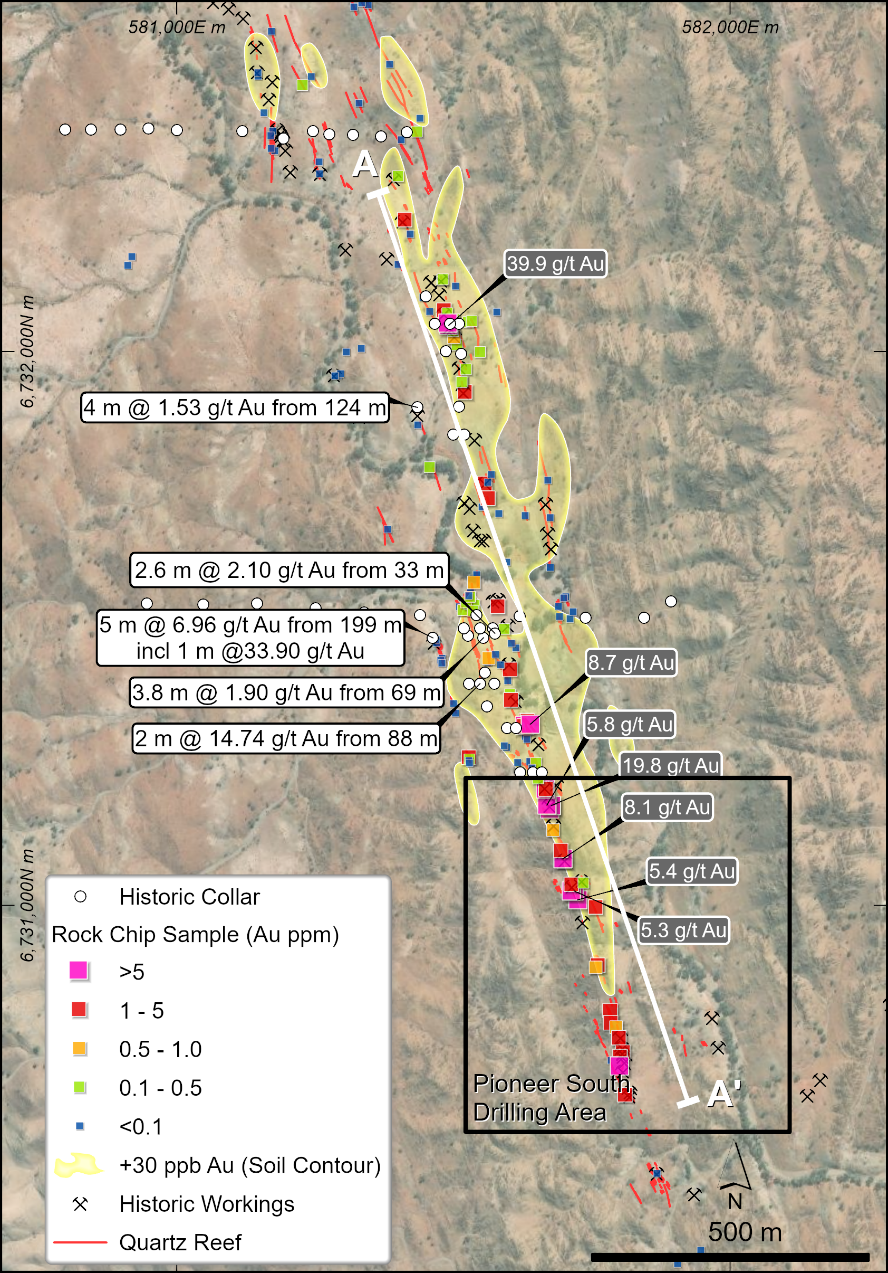
Figure 2: Plan view of historic workings and quartz reefs with rock chip assays2and previously reported significant drilling intersections2 at the Pioneer prospect. Pioneer South planned drilling area also demarcated.
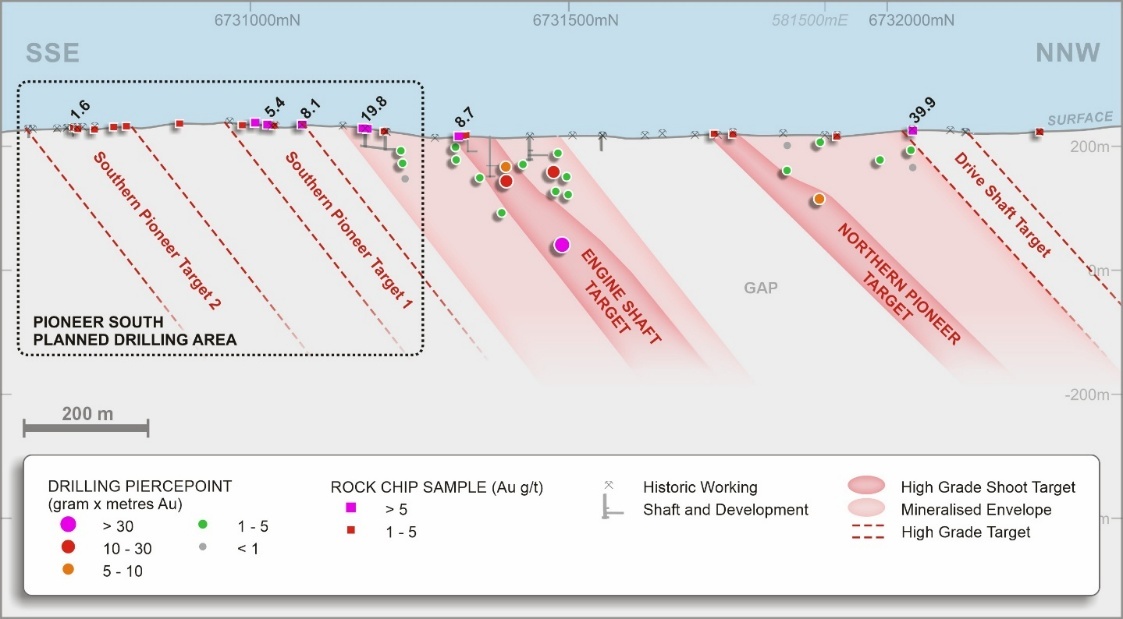
Figure 3: Long section interpretation showing the Southern Pioneer and Main Shaft targets, historic shafts, previous drilling pierce points (coloured by gram x metres Au)from broad spaced drilling2 and recent rock chip results2. Targets are high-grade NNW plunging shoots.
Pioneer South Prospect – Drilling Program
Planned RC drilling at Pioneer South prospect primarily targets two historically worked, parallel, steeply west-dipping quartz-reefs that comprise a main vein that can be traced continuously in outcrop for approximately 600 m; and a second, parallel, semi-continuous vein that occurs over the same trend, approximately 20 m – 25 m to the east. Rock-chip assays from the outcropping reefs or mullock from reef workings returned consistent +1 g/t Au along the entire 600 m trend and included previously reported results of 19.8 g/t Au, 8.12 g/t Au and 5.83 g/t Au2 (Figure 2).
The Pioneer South veins have not previously been drilled.
Drilling is planned for 8 RC holes in total for ~1,000 m on four sections designed to test below (and down-plunge) of the best developed and historically mined segments of the outcropping quartz-reefs at Pioneer South (Figure 3). Drill planning incorporates and prioritises modelled intersection of the quartz reefs at depth with mapped and projected anticline hinge position(s); which represents a favourable position for mineralisation in line with Victorian slate belt, orogenic lode-style quartz-reef mineralisation which is considered strongly analogous to the typical deposits encountered at Tibooburra (Refer Figure 7).
Clone Prospect
The Clone prospect is characterised by significant historic workings and an ~600 m long and up to 250 m wide coherent >30 ppb Au-in-soil anomaly3, with previously reported rock chip results up to 89.6 g/t Au and 41.9 g/t Au3 from mullock dump samples, and 31.4 g/t Auand 10.4 g/t Au3 from limited quartz vein outcrop, which confirms the high-grade nature of the mineralisation at Clone.
Outcrop mapping at Clone defines a west dipping reverse fault/thrust (Clone Thrust) associated with high-grade gold mineralisation. Most historical workings and significant sericite-carbonate alteration are proximal to, or constrained within the fault/shear zone (Figure 4). The turbidite stratigraphy is intensely folded (tight to isoclinal) with most fold axes plunging moderately NNW. The intersection of regional foliation and the main structures, provide a shallow north plunging intersection, similar to the high-grade shoot plunge defined by the recent drilling (described below).
Clone has been previously drilled across two campaigns (Novo in 2025 and Manhattan in 2023). Previous drilling was designed to test an approximately 500 m strike of prospective Clone trend across the main area of historical workings.
Previously reported significant results across both programs include:1
- 12 m @ 5.90 g/t Au from 16 m including 5 m @ 13.74 g/t Au from 23 m (TBR0001)
- 17 m @ 2.40 g/t Au from 59 m including 9 m @ 4.14 g/t Au from 59 m (TBR0014)
- 6 m @ 8.39 g/t Au from 82 m (CL0007)
- 9 m @ 6.03 g/t Au from 16 m (CL0010)
- 6 m @ 4.22 g/t Au from 66 m, including 4 m @ 6.21 g/t Au from 68 m (CL0004)
- 29 m @ 1.37 g/t Au from 61 m , including 19 m @ 1.81 g/t Au from 62 m Au (CL0002)
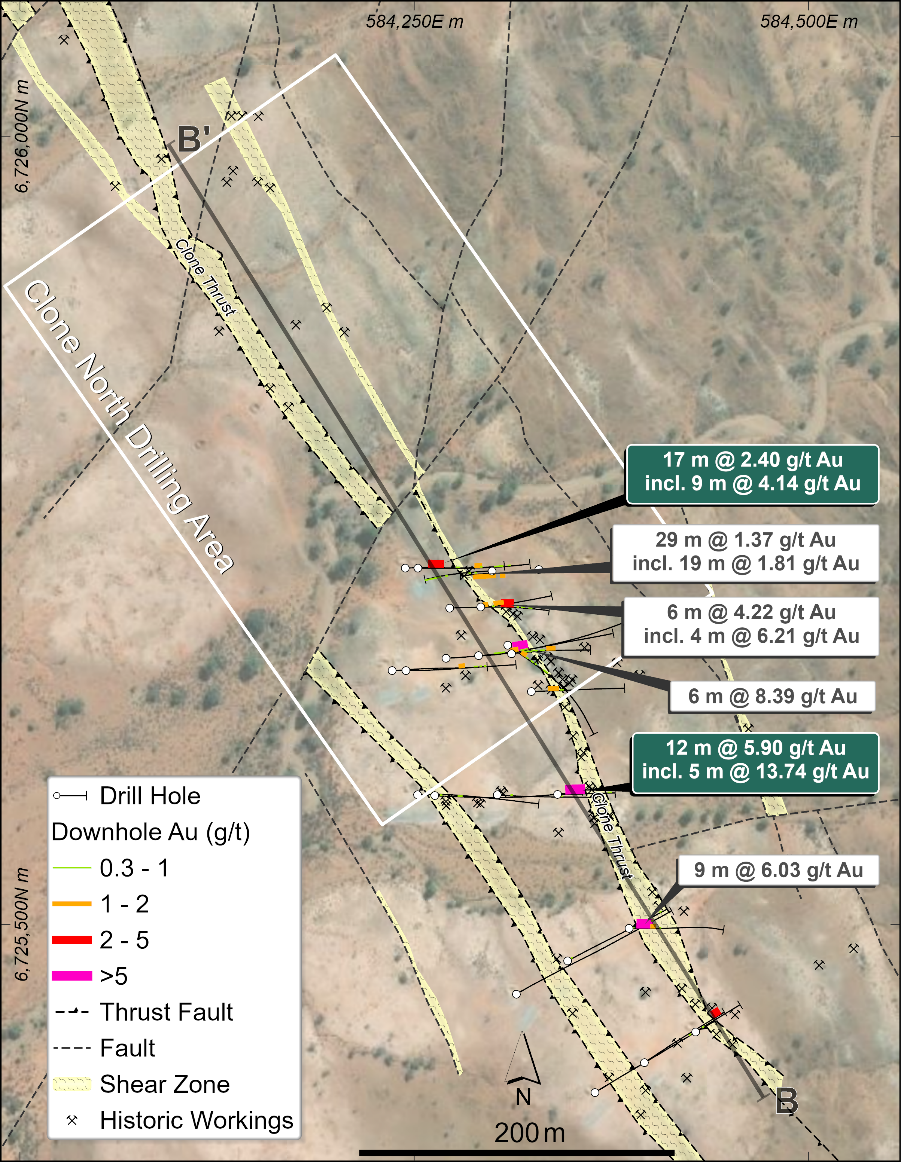
Figure 4:Target mineralised structures and alteration zones at the Clone prospect, showing previous drilling with significant intercepts by Novo1 (larger collars, green callouts) and previous drilling with significant intercepts by Manhattan1 (smaller collars, white callouts). Area of upcoming drilling at Clone also demarcated.
Drilling to-date demonstrates grade and width continuity at Clone and is supportive of a near-surface, shallow (10 - 20°) north plunging shoot of high-grade mineralisation currently defined over an ~300 m strike length and to a vertical depth of 90 m. Mineralisation remains open and untested down plunge (Figure 5).
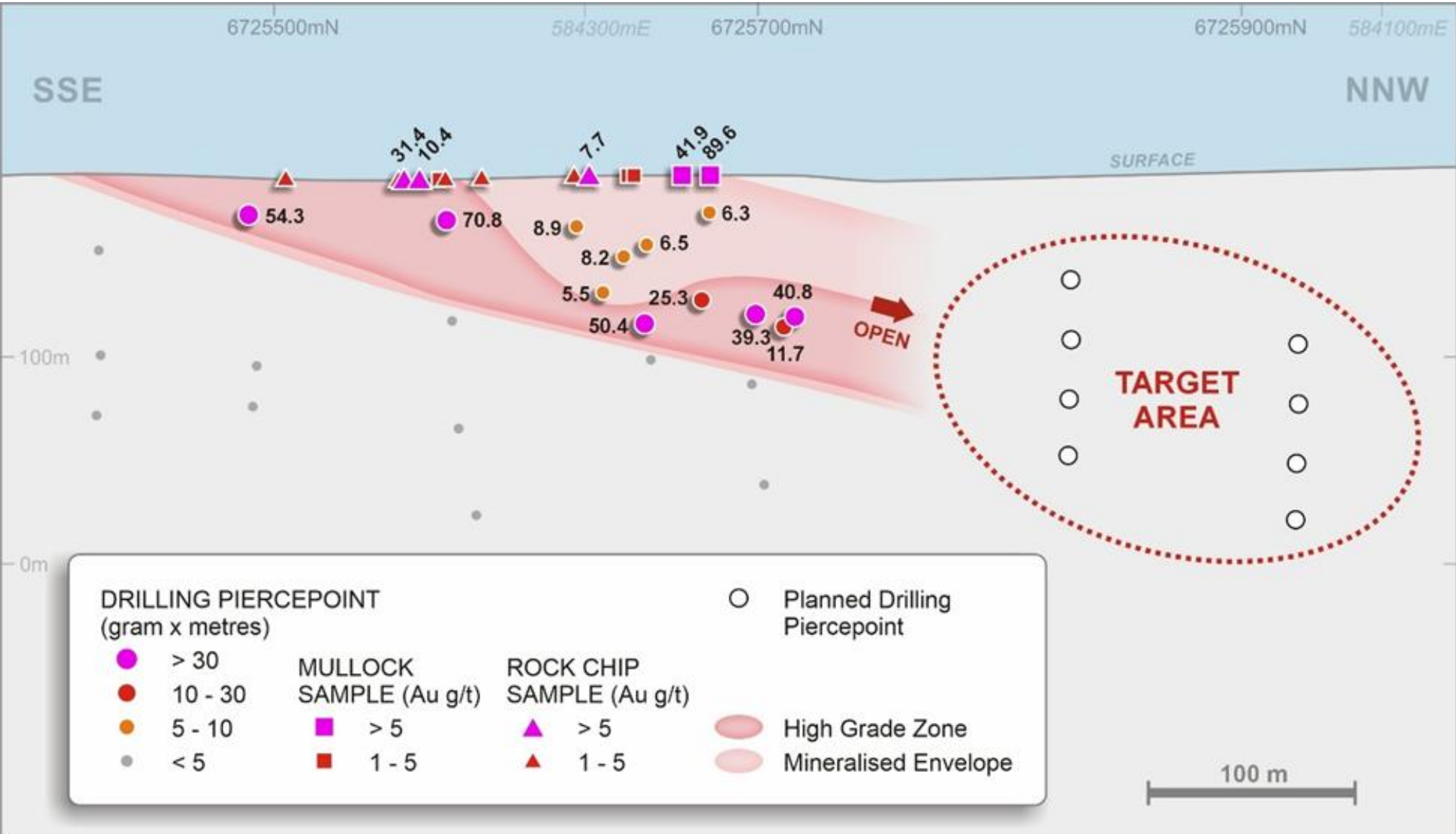
Figure 5:Clone interpreted long section (B {SSE} – B’ {NNW} - see Figure 4 for location) highlighting grade and width continuity, shallow north plunge to the high-grade defined shoot, and the down plunge current target to the mineralisation that is open to the north. Pierce points represent drill intersections expressed in gram x metre values from both the Manhattan 2023 RC1 and Novo 2025 RC1 drill programs. Planned new RC drill collars in white are schematic albeit broadly in line spatially with planned step out drill lines at 100 m and 200 m respectively to the north of existing drilling.
Clone Prospect – Drilling Program
Planned RC drilling at Clone primarily aims to test the interpreted down-plunge extension of the shallow, north-plunging, open high-grade gold mineralisation defined in the previous 2023 and 2025 drilling campaigns. Select down dip and/or infill drilling on existing drill lines will also be completed to follow up on any open intersections and test the potential for parallel, stacked lodes.
Drilling is planned for 11 holes in total for ~1,700 m and will involve an approximately 100 m step-out drill traverse to test for the northern extension of the Clone mineralisation, in addition to select holes on pre-existing drill lines at Clone (Figure 4).
Refer to Figure 4 and Figure 5 in the previous section for map and long section depicting the target areas for upcoming drilling at Clone.
Tibooburra Regional Prospectivity – Geology Model
The Tibooburra Gold Project encompasses the historical Albert Goldfields in the Koonenberry Gold District. The project spans the boundary between two major orogens (the Delamarian and Thompson Orogens); and encompasses two regionally significant, deep-tapping west-dipping structures (the Warratta and New Bendigo Faults) (see Figure 6).
A series of distinct parallel NNW-trending, fault-controlled alteration corridors are a characteristic feature of the project area and are interpreted as important west-dipping thrust faults that potentially host mineralisation (e.g. the Clone – Pioneer Thrust). These faults are sub-parallel to oblique to the regional foliation trend, and commonly display zones of intense shearing, strong sericite-carbonate alteration, and quartz veining. Gold occurrences are a common feature within the typically more recessive, shear-alteration corridors, as are evidenced by the historic workings at Tibooburra that extend for some 20 – 30 km along strike. Only a handful of the best-developed workings at Tibooburra have been explored using modern exploration techniques. The current, non-alluvial, gold-reef prospects on the project area typically represent previously known surface or near-surface historic gold workings (see Figure 6).
Important gold reef targets highlighted by previous and current explorers include but are not limited to, the prospects of New Bendigo, Clone, Pioneer, Warratta Reef and Phoenix (see Figure 6). Outside of the heavily drilled New Bendigo prospect, limited modern exploration has been conducted on a relatively small number of discrete targets. The area is significantly under-explored, and interpretation of satellite imagery and spectral data, coupled with geophysical interpretation, reveal regional prospective mineralised trends that extend beneath Mesozoic or younger cover sequences that have had very little or no modern exploration. This is particularly evident in the south of the project area where cover sediments extend for some 15 km, providing real opportunities for exploration aimed at testing potential targets.
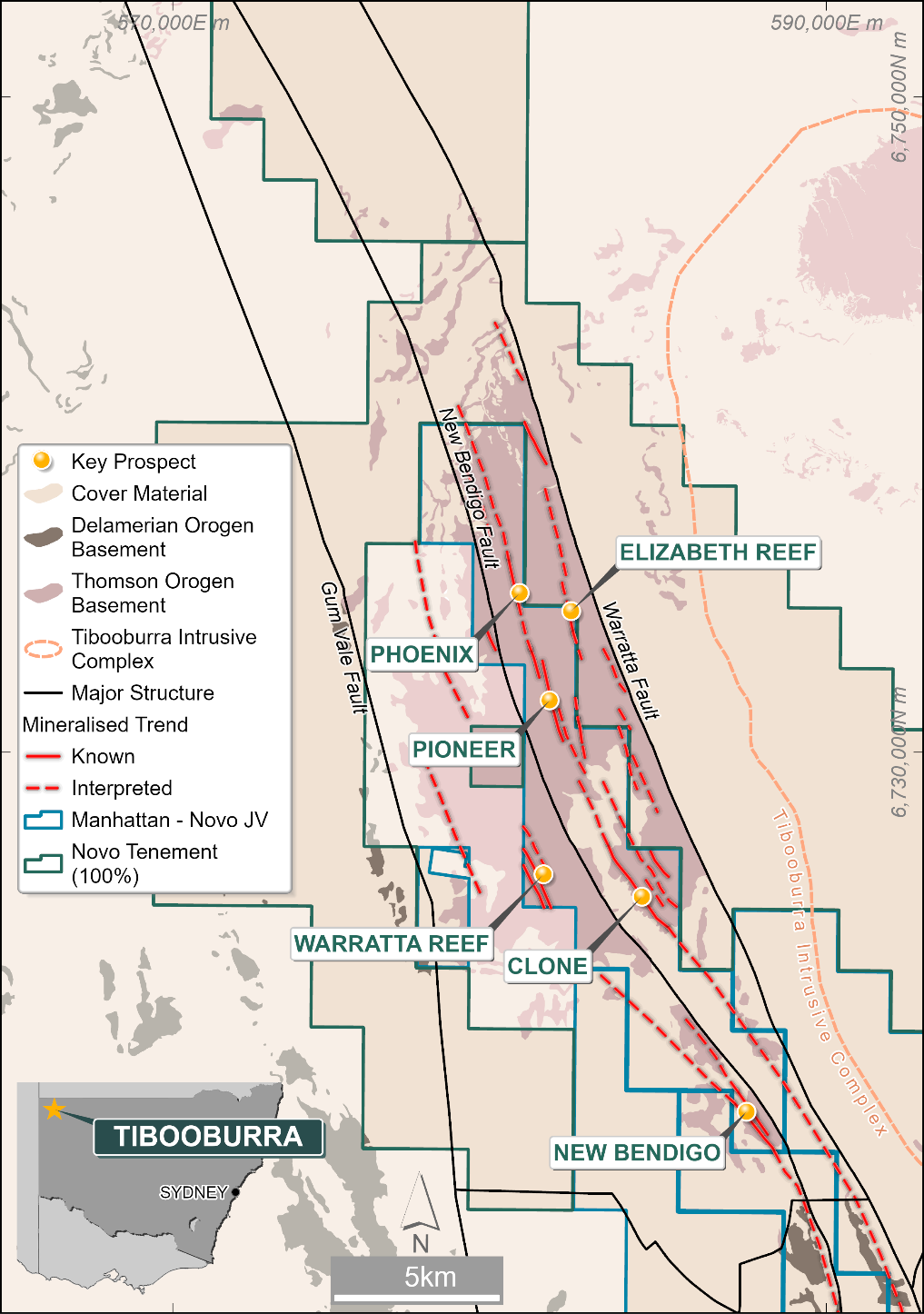
Figure 6:The Tibooburra Gold Project showing basement geology (darker colours) versus younger cover sequences (lighter colours) and key structural architecture. Solid red lines represent known mineralised trends; dashed red lines are interpreted mineralised trends. Only key prospects are depicted.
The district is considered analogous to the Stawell Zone of the Victorian Goldfields. The mineralisation at Tibooburra is classified as an orogenic gold system hosted within a turbidite-dominated sequence, sharing key structural and geological similarities with the turbidite-hosted gold deposits of Central Victoria’s Western Lachlan Orogen (Figure 7).
Similarities between Tibooburra and Central Victoria include west dipping mineralised reverse faults, tight shallow plunging folds, age of the host rocks, mineralisation styles and structural deformation history. The current understanding of the Clone, Pioneer and New Bendigo prospects provide several possibilities for mineralisation styles at Tibooburra (Figure 7) and structural control on the high-grade shoots.
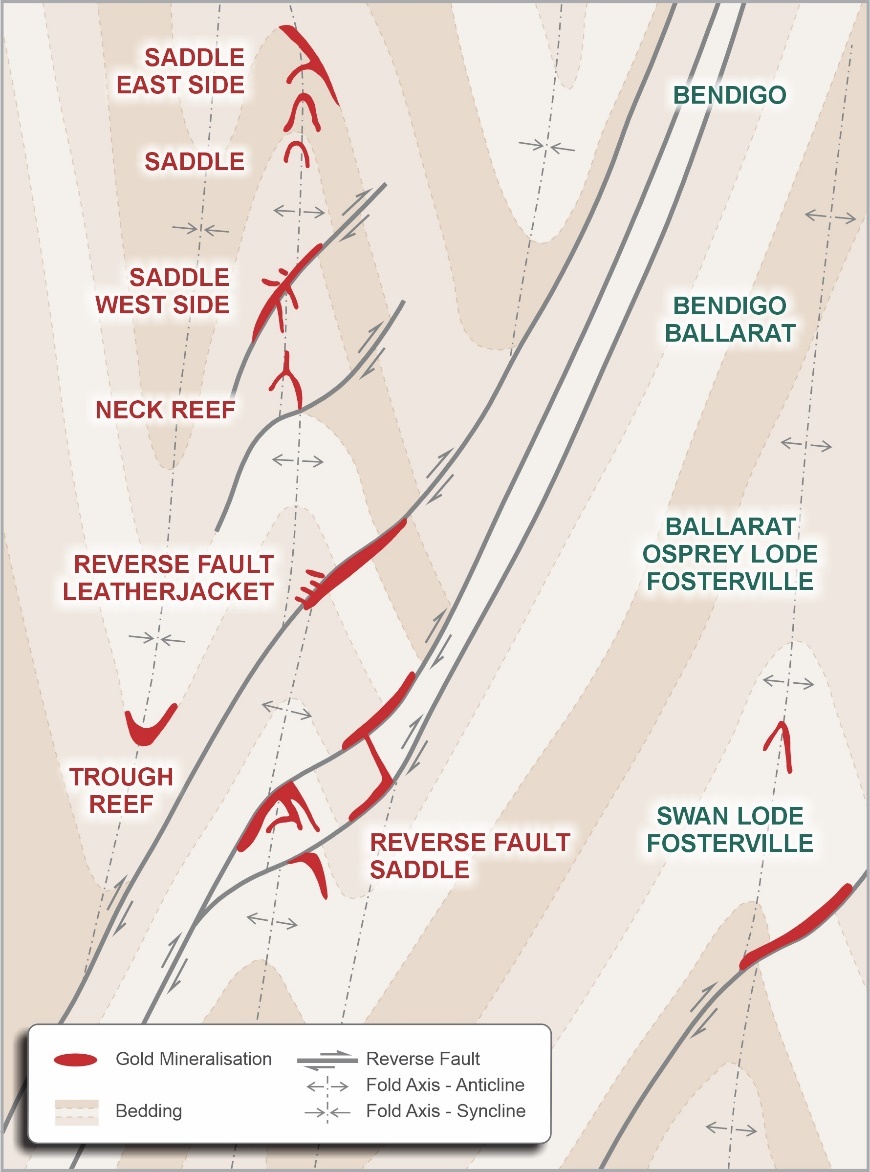
Figure 7:Simplified structural model for orogenic turbidite-hosted gold deposits of Central Victoria (not depth specific) and examples of these deposits in Victoria (modified and adapted from W.R.H Ramsay et al 1998 and Hitchman et al 2017).
This rationale, adapted from Ramsay et al. (1998), Hitchman et al. (2017), and Greenfield and Reid (2006)4, underscores Tibooburra’s potential as an orogenic gold system, with exploration focused on structurally controlled targets analogous to the Victorian Goldfields.
While Novo believes such similarities exist, no assurance can be given that Novo will achieve similar results at its Tibooburra Project.
WORK PROGRAM
An approximately 2,700 m RC drilling program is planned post receipt of all regulatory and land holder approvals with an aim for commencement in late Q3 2026.
Drilling is planned to test the Clone (~1,700 m) and Pioneer South (~1,000 m) prospects. Drilling is anticipated to take between three to four weeks for completion (including mobilisation). Use of downhole survey tools such as Televiewer will be utilised to ascertain critical structural data on faults, veins, bedding and shearing.
Ongoing regional stream sediment sampling coupled with targeted mapping and surface sampling throughout H2 2026 are designed to generate new gold-anomalous zones, grow the target pipeline, and help prioritise those targets for future aircore and/or follow up RC drill planning.
The mineralisation presented in the body of this announcement is not necessarily representative of mineralisation throughout the Tibooburra Gold Project.
Authorised for release by the Board of Directors.
CONTACT
Investors:
Mike Spreadborough
+61 8 6400 6100
info@novoresources.com | North American Queries:
Leo Karabelas
+1 416 543 3120
leo@novoresources.com | Media:
Peter Taylor
+61 412 036 231
peter@nwrcommunication.com.au |
QP STATEMENT
Dr Chris Doyle (MAIG), is the qualified person, as defined under National Instrument 43-101 Standards of Disclosure for Mineral Projects, responsible for, and having reviewed and approved, the technical information contained in this news release, as well as having verified the data disclosed, including sampling, analytical and test data underlying the information or opinions contained in the written disclosure. Dr Doyle is an Exploration Manager at Novo.
JORC COMPLIANCE STATEMENT
Previous Exploration Results
The information in this news release that relates to previously reported exploration results at Tibooburra is extracted from the Company’s ASX announcements referred to in endnotes 1, 2 and 3 below, each of which is available to view at www.asx.com.au. The Company confirms that it is not aware of any new information or data that materially affects the information included in the original market announcements and that all material assumptions and technical parameters underpinning the estimates in the market announcements continue to apply and have not materially changed. The Company confirms that the form and context in which the competent persons findings are presented have not been materially modified from the original market announcements.
FORWARD-LOOKING STATEMENTS
Some statements in this news release may contain “forward-looking statements” within the meaning of Canadian and Australian securities law and regulations. In this news release, such statements include but are not limited to planned exploration activities and the timing of such. These statements address future events and conditions and, as such, involve known and unknown risks, uncertainties and other factors which may cause the actual results, performance or achievements to be materially different from any future results, performance or achievements expressed or implied by the statements. Such factors include, without limitation, customary risks of the resource industry and the risk factors identified in Novo’s annual information form for the year ended December 31, 2025 (which is available under Novo’s profile on SEDAR+ at www.sedarplus.ca and at www.asx.com.au) and in the Company’s options prospectus dated 9 March 2026 which is available at www.asx.com.au. Forward-looking statements speak only as of the date those statements are made. Except as required by applicable law, Novo assumes no obligation to update or to publicly announce the results of any change to any forward-looking statement contained or incorporated by reference herein to reflect actual results, future events or developments, changes in assumptions or changes in other factors affecting the forward-looking statements. If Novo updates any forward-looking statement(s), no inference should be drawn that the Company will make additional updates with respect to those or other forward-looking statements.
________________________________
1 Refer to Novo’s ASX announcement dated 9 July 2025 – High-Grade Results from RC Drilling at Tibooburra Gold Project
2 Refer to Novo’s ASX announcement dated 6 November 2025 – New South Wales Exploration Update – High-Grade Gold Rock Chips from Tibooburra
3 Refer to ASX news release by Novo Resources dated 2 April 2025 – Promising Surface Exploration Informs Tibooburra RC Drilling Program
4Greenfield J & Reid W, 2006. Orogenic gold in the Tibooburra area of northwestern NSW- a ~440 Ma ore system with comparison to the Victorian Goldfields, ASEG Extended Abstracts, 2006:1, 1-8. Ramsay W.R.H, Bierlein F.P, Arne D.C and Vanden Berg A.H.M, 1998. Turbidite-hosted gold deposits of Central Victoria, Australia: their regional setting, mineralising styles, and some genetic constraints, Ore Geology Reviews, Volume 13, Issues 1–5, 1998, Pages 131-151.Hitchman, S.P., Phillips, N.J. and Greenberger, O.J., 2017 - Fosterville gold deposit: in Phillips, G.N., (Ed.), 2017 Australian Ore Deposits, The Australasian Institute of Mining and Metallurgy, Mono 32, pp. 791-796.
ABOUT NOVO
Novo is an Australian based gold explorer listed on the ASX and the TSX focussed on discovering standalone gold and copper projects with > 1 Moz development potential. Novo is an innovative gold explorer with a significant land package covering approximately 4,160 square kilometres in the Pilbara region of Western Australia, along with the 22 square kilometre Belltopper project in the Bendigo Tectonic Zone of Victoria, Australia. In addition to the above, Novo is part of prospective farm-in agreements in New South Wales.
Novo has a significant investment portfolio and a disciplined program in place to identify value accretive opportunities that will build further value for shareholders.
Please refer to Novo’s website for further information including the latest corporate presentation.
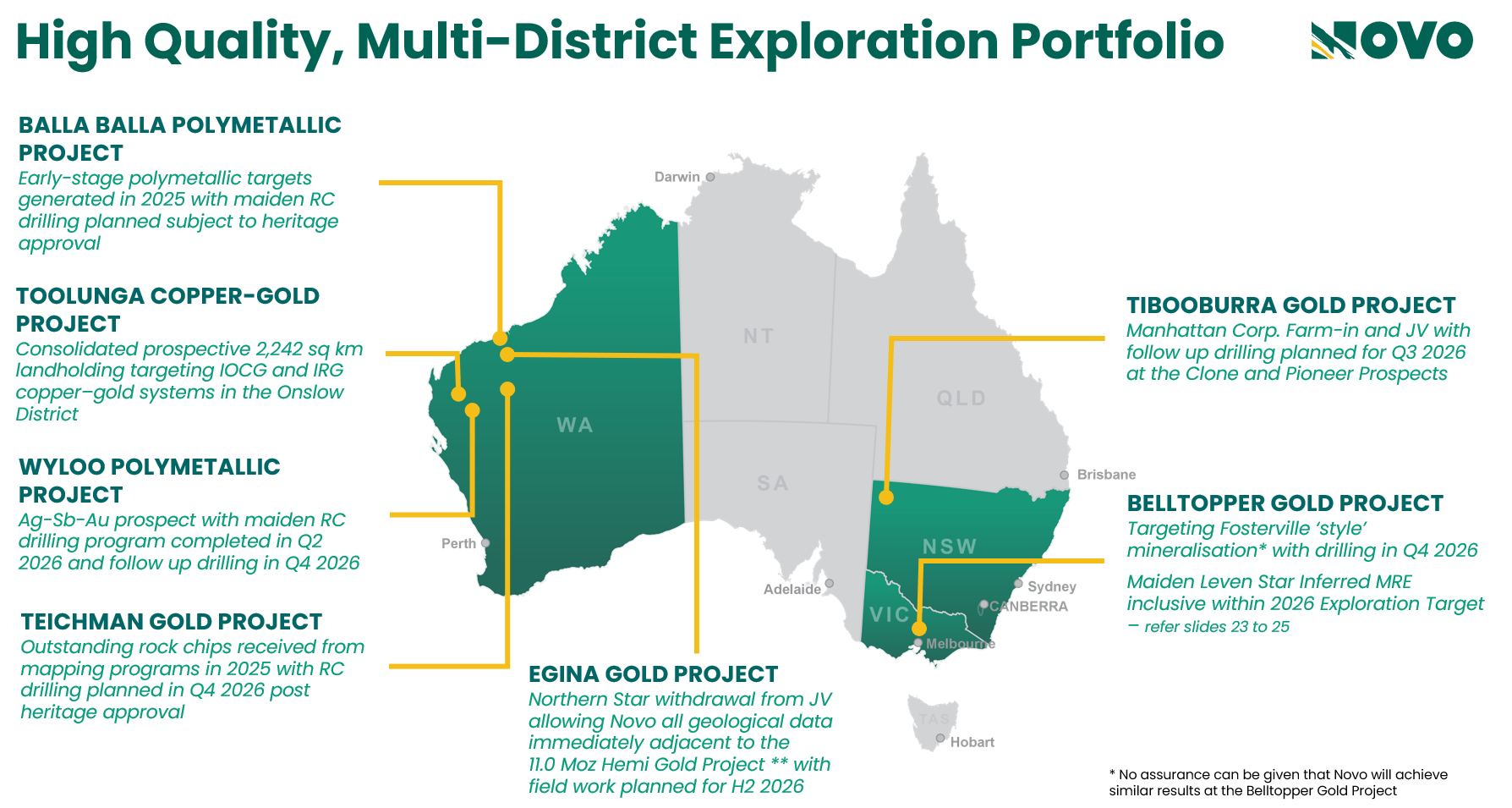
** Refer to NST’s News Release dated 3 June 2026 entitled Resources and Reserves Update, which refers to Mineral Resources for the Hemi Gold Project (excluding regional) as of 31 March 2026.
Photos accompanying this announcement are available at
https://www.globenewswire.com/NewsRoom/AttachmentNg/4ba401c3-86b4-4378-85fb-c593f1f29558
https://www.globenewswire.com/NewsRoom/AttachmentNg/464dce23-a080-466b-bbe9-f07cdec4b0ff
https://www.globenewswire.com/NewsRoom/AttachmentNg/4aae683b-ce4d-4351-abbb-07b55e6bd59c
https://www.globenewswire.com/NewsRoom/AttachmentNg/4086164e-d9ae-481d-b6ee-386710ebe550
https://www.globenewswire.com/NewsRoom/AttachmentNg/6dcf6aa6-031f-4e87-85b9-dd9a8ea6d5cb
https://www.globenewswire.com/NewsRoom/AttachmentNg/60ba5a3e-47c9-4a60-b1eb-c35a10905b16
https://www.globenewswire.com/NewsRoom/AttachmentNg/b82c140c-6acc-4bdb-b659-e6fe8990683b
https://www.globenewswire.com/NewsRoom/AttachmentNg/8d68e722-d4ee-4f7f-84a1-569e0e33cc7e
https://www.globenewswire.com/NewsRoom/AttachmentNg/4c95c69c-da95-4e89-a3ca-cb951a483002



Overlooking Tibooburra Gold Project, Clone Prospect
Overlooking Tibooburra Gold Project, Clone Prospect
Figure 1
Location, tenure and key prospects at Tibooburra, NSW. Tenements EL9867 and EL9900 are newly granted (and 100% owned by Novo). All other tenements belong to the Tibooburra Gold Project Farm-In JV with Manhattan Gold Corporation and Awati Resources Pty Ltd.
Figure 2
Plan view of historic workings and quartz reefs with rock chip assays(2) and previously reported significant drilling intersections(2) at the Pioneer prospect. Pioneer South planned drilling area also demarcated.
Figure 3
Long section interpretation showing the Southern Pioneer and Main Shaft targets, historic shafts, previous drilling pierce points (coloured by gram x metres Au) from broad spaced drilling(2) and recent rock chip results(2). Targets are high-grade NNW plunging shoots.
Figure 4
Target mineralised structures and alteration zones at the Clone prospect, showing previous drilling with significant intercepts by Novo(1) (larger collars, green callouts) and previous drilling with significant intercepts by Manhattan(1) (smaller collars, white callouts). Area of upcoming drilling at Clone also demarcated.
Figure 5
Clone interpreted long section (B {SSE} – B’ {NNW} - see Figure 4 for location) highlighting grade and width continuity, shallow north plunge to the high-grade defined shoot, and the down plunge current target to the mineralisation that is open to the north. Pierce points represent drill intersections expressed in gram x metre values from both the Manhattan 2023 RC(1) and Novo 2025 RC(1) drill programs. Planned new RC drill collars in white are schematic albeit broadly in line spatially with planned step out drill lines at 100 m and 200 m respectively to the north of existing drilling.
Figure 6
The Tibooburra Gold Project showing basement geology (darker colours) versus younger cover sequences (lighter colours) and key structural architecture. Solid red lines represent known mineralised trends; dashed red lines are interpreted mineralised trends. Only key prospects are depicted.
Figure 7
Simplified structural model for orogenic turbidite-hosted gold deposits of Central Victoria (not depth specific) and examples of these deposits in Victoria (modified and adapted from W.R.H Ramsay et al 1998 and Hitchman et al 2017).
High Quality, Multi-District Exploration Portfolio
High Quality, Multi-District Exploration Portfolio
© 2026 Canjex Publishing Ltd. All rights reserved.