Toronto, Ontario--(Newsfile Corp. - November 18, 2026) - Epic Gold Corp. (CSE: EPG) (OTCQB: NFLDF) (FSE: 6341) ("Epic Gold" or the "Company") is pleased to announce an updated independent Mineral Resource Estimate ("MRE") for its Benoist Gold Project ("Benoist" or the "Project"), located approximately 70 km northeast of Lebel-sur-Quévillon in the Eeyou Istchee James Bay territory of Québec, Canada. The MRE was prepared in accordance with the CIM Definition Standards for Mineral Resources and Mineral Reserves and is disclosed pursuant to National Instrument 43-101 ("NI 43-101").
The MRE, effective October 14, 2026, reports separate Indicated and Inferred Mineral Resources within conceptual underground mineable-shape constraints. It applies a gold-only cut-off grade of 1.2 g/t Au and excludes material within the specified crown-pillar constraint.
Highlights:
- Indicated Mineral Resource of 2,072,000 tonnes grading 2.26 g/t Au, containing 150,700 ounces of gold.
- Inferred Mineral Resource of 1,620,600 tonnes grading 1.67 g/t Au, containing 86,900 ounces of gold.
- Mineral Resources reported at 1.2 g/t Au using conceptual underground shapes generated with Deswik Mineable Shape Optimizer ("DSO"), a US$3,500/oz gold price and an assumed 90% recovery.
- The DSO shapes were determined on a gold-only basis. Copper and silver grades and contained metal are reported separately but assigned no economic contribution in the DSO optimization.
- The updated estimate incorporates drilling following the 2020 estimate and identifies clear priorities for infill drilling, deeper exploration and geotechnical work on the crown pillar.
Rod Husband, P.Geo., President & CEO of Epic Gold, commented: "The updated Mineral Resource Estimate at Benoist represents another important milestone for Epic Gold, establishing an Indicated Mineral Resource alongside an Inferred Mineral Resource and further strengthening our resource base across our four Canadian gold projects. The updated geological model provides a clearer understanding of the mineralized system and highlights opportunities for resource expansion, particularly at depth. We look forward to building on this foundation through targeted drilling and disciplined exploration, with a focus on expanding the resource and increasing confidence in the existing mineralization."
The 2026 MRE is based on a drill hole database with 139 drill holes totalling 53,083 metres in the MRE area. Further details on the supporting drill hole database and MRE parameters and assumptions are set out below.
Mineral Resource Estimate
The Benoist Mineral Resource Estimate has an effective date of October 14, 2026, and is summarized in Table 1.
The 2026 MRE incorporates all available drilling information within the resource area, including drilling completed by Cartier Resources after its 2020 MRE. Following the incorporation of new drilling results, the necessary revisions to the 3D geological model were completed using Leapfrog Geo. The Mineral Resource is reported as Indicated and Inferred mineral resources based on geological and grade continuity, data density, search ellipse criteria, drill hole spacing, interpolation parameters and considered amenable to underground mining method.
The assessment of reasonable prospects for eventual economic extraction (RPEEE) assumes that some or all of the estimated Mineral Resources could potentially be extracted using a high-volume underground long hole mining scenario, with an assumed production rate of approximately 4,000 to 4,500 tonnes per day (tpd). This scenario also assumes the potential development of on-site processing and tailings management facilities, subject to sufficient mineral inventory to support their economic viability.
The MRE is constrained by conceptual mineable shapes generated using Deswik Mineable Shape Optimizer (DSO). These constraints support the assessment of RPEEE in accordance with the CIM Definition Standards for Mineral Resources and Mineral Reserves (May 10, 2014) and the CIM Estimation of Mineral Resources and Mineral Reserves Best Practice Guidelines (November 29, 2019). The application of the DSO constraints may incorporate internal below-cut-off material required to maintain practical mining continuity, while excluding above-cut-off blocks that cannot be incorporated into coherent and potentially mineable shapes. Accordingly, the reported Mineral Resource should not be interpreted as a simple aggregation of individual blocks above the reporting cut-off grade.
The conceptual mining scenario and associated assumptions are intended solely to support the assessment of RPEEE and do not constitute a mine plan, mine design, or economic study. No preliminary economic assessment, pre-feasibility study, or feasibility study has been completed for the Project.
Table 1: Benoist Project — 2026 Mineral Resource Estimate (at 1.2 g/t Au cut-off)
| Zone / Domain | Tonnes | Au (g/t) | Cu (%) | Ag (g/t) | Au (oz) | Cu (lb) | Ag (oz) |
| INDICATED |
| Dyke | 117,700 | 1.87 | 0.01 | 0.59 | 7,100 | 23,700 | 2,200 |
| Pusticamica | 1,954,300 | 2.29 | 0.16 | 7.29 | 143,600 | 6,873,900 | 457,800 |
| Total Indicated | 2,072,000 | 2.26 | 0.15 | 6.91 | 150,700 | 6,897,600 | 460,000 |
| INFERRED |
| Dyke | 433,400 | 1.91 | 0.01 | 0.43 | 26,700 | 107,700 | 6,000 |
| Pusticamica | 1,185,700 | 1.58 | 0.07 | 2.95 | 60,100 | 1,701,400 | 112,500 |
| LG domain | 1,500 | 2.19 | 0.01 | 0.33 | 100 | 200 | 0 |
| Total Inferred | 1,620,600 | 1.67 | 0.05 | 2.28 | 86,900 | 1,809,300 | 118,500 |
Mineral Resource Estimate notes:
- The independent and Qualified Persons for the 2026 MRE, as defined by NI 43-101, are Claude Savard, P.Geo., Eric Lecomte, P.Eng. and Alain Carrier, P.Geo., M.Sc. (Norda Stelo Inc.). The effective date of the estimate is October 14, 2026.
- These mineral resources are not mineral reserves as they do not have demonstrated economic viability. The Mineral Resource Estimates follow CIM Definition Standards.
- The Pusticamica and Dyke structures were modelled using a minimum true thickness of 2.4 m, while a 3.0 m minimum mining width was applied for the DSO constraints. Raw gold assays were capped at 55 g/t Au for Pusticamica, 20 g/t Au for Dyke, and 6 g/t Au for the LG domain. Silver assays were capped at 122 g/t Ag in Pusticamica North and 15 g/t Ag in the LG domain. No effective capping was applied to the remaining silver and copper datasets. An in situ bulk density of 2.88 t/m³ and a composite length of 1.0 m were used for the MRE.
- The 2026 MRE was completed using a block model developed in Leapfrog Geo v.2026.1. Gold, silver and copper grades were independently interpolated using ordinary kriging, with hard boundaries between structures and soft boundaries between the North and South domains of each structure. No gold-equivalent grade was calculated.
- The Mineral Resource Estimate is classified as Indicated and Inferred. The Indicated category is defined by a minimum of three (3) DDHs within a maximum distance of 25 m, whereas the Inferred category is defined by a minimum of two (2) DDHs within a maximum distance of 50 m, where reasonable geological and grade continuity is demonstrated.
- Reasonable Prospects for Eventual Economic Extraction are supported by a 3.0 m minimum mining width, a reporting cut-off grade of 1.2 g/t Au, conceptual underground DSO mineable-shape constraints, and a crown-pillar constraining surface at an elevation of 185 m.
- The MRE is constrained to meet the RPEEE requirement using conceptual underground mineable shapes generated with Deswik Mineable Shape Optimizer (DSO). The shapes were developed for a potential long-hole mining scenario, considering the geometry and dip of the mineralized envelopes, a minimum mining width of 3.0 m, and stope dimensions of 30 m in height and 20 m along strike.
- The underground cut-off grade of 1.2 g/t Au is based on a gold price of CAD4,830/oz, a USD:CAD exchange rate of 1.38, a royalty of CAD24.15/oz, selling and refining costs of CAD6.90/oz, mining costs of CAD85/t mined, G&A costs of CAD25/t milled, site and environmental costs of CAD5/t, camp and workforce logistics costs of CAD5/t, processing costs of CAD40/t milled, and a metallurgical recovery of 90%. The calculated Break-even cut-off grade is 1.15 g/t Au. The cut-off grade should be re-evaluated as market conditions change.
- Results are presented in situ. Contained troy ounces = tonnes × grade (g/t) ÷ 31.10348. Tonnes contained ounces and contained pounds were rounded to the nearest hundred. Totals may not add due to rounding and contained metal values may differ from calculations performed using the rounded tonnes and grades presented in the table; rounding followed the recommendations in NI 43-101.
- The QPs are not aware of any known environmental, permitting, legal, title-related, taxation, socio-political, marketing or other relevant issue that could materially affect the Mineral Resource Estimate
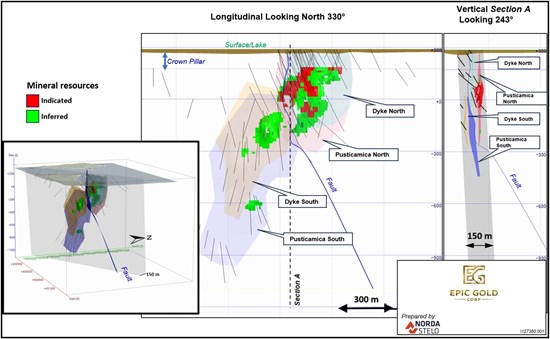
Figure 1: Benoist Project 3D view — MRE 2026
To view an enhanced version of this graphic, please visit:
https://images.newsfilecorp.com/files/6393/324583_epicone.jpg
Drilling and Drill Hole Database
The drill hole database containing 139 drill holes (53,083 m) was utilized to develop the Mineral Resource Estimate wireframes, which were intersected by 116 drill holes comprising 16,598 metres. The independent QPs from Norda Stelo validated the Mineral Resource database by reviewing drill hole collar locations, downhole surveys, assay results, and geological intervals, including checks for inconsistencies, duplicate entries, and missing data.
Data Verification and QA/QC Procedures
Data verification for the 2020 MRE included site inspections and drill core reviews, independent sampling and database validation. For the 2026 MRE, additional verification of the drilling database was completed through detailed reviews of collar, survey, assay, geology and vein data, with appropriate corrections incorporated into the resource database.
QA/QC programs for the drilling campaigns included the routine insertion of certified reference materials and blanks, supported by re-assays and inter-laboratory checks. The QPs consider the database and analytical results to be of sufficient quality and reliability for Mineral Resource estimation.
Mineral Resource Estimation Methodology
The updated MRE incorporates drilling completed by Cartier Resources after the 2020 estimate. Three-dimensional mineralized domains for the Pusticamica, Dyke and low-grade ("LG") structures were revised using Leapfrog Geo. Gold, copper and silver were independently interpolated by ordinary kriging into 5 × 5 × 5 m parent blocks with 1.25 m sub-blocking. A uniform bulk density of 2.88 t/m³ and 1.0 m assay composites were used.
The Pusticamica and Dyke structures were modelled with a minimum true thickness of 2.4 m. Mineral Resource classification reflects geological and grade continuity, drill hole spacing, estimation search criteria and data density. Indicated classification requires at least three drill holes within 25 m and Inferred classification requires at least two drill holes within 50 m, where continuity is supported by the geological model.
Reasonable prospects for eventual economic extraction ("RPEEE") were assessed using conceptual underground long-hole mining constraints generated with DSO, including a minimum mining width of 3.0 m and nominal stope dimensions of 30 m in height and 20 m along strike. The method can include internal below-cut-off blocks needed for continuity and exclude above-cut-off blocks that are not part of potentially mineable shapes. A crown-pillar surface at 185 m elevation was applied; the excluded material is not part of the reported MRE.
The conceptual constraints are used solely to support RPEEE. They are not a mine plan, mine design or economic study. No Preliminary Economic Assessment, Pre-Feasibility Study or Feasibility Study has been completed for the Project.
Principal Mineral Resource Assumptions
| Parameter | Assumption |
| Gold price | US$3,500/oz (C$4,830/oz) |
| Foreign exchange | C$1.38 per US$1.00 |
| Gold recovery | 90% |
| Reporting cut-off | 1.2 g/t Au; calculated break-even 1.15 g/t Au |
| Underground mining | C$85/t mined |
| Processing | C$40/t milled |
| General and administration | C$25/t milled |
| Site and environmental | C$5/t |
| Camp and workforce logistics | C$5/t |
| Royalty | C$24.15/oz |
| Selling and refining | C$6.90/oz |
| Minimum mining width | 3.0 m |
| Nominal stope dimensions | 30 m high × 20 m along strike |
| Bulk density | 2.88 t/m³ |
The MRE constraints were generated using gold only. Copper and silver grades and contained metal are disclosed within the resource shapes but were not included in the cut-off calculations or DSO economic assessment; no gold-equivalent grade was calculated. The cut-off should be reconsidered as relevant commodity prices, exchange rates, recoveries and costs change.
Context of the Previous Mineral Resource Estimate
The 2026 MRE supersedes the earlier estimate disclosed for the Project in 2020 and is Epic Gold's first current Mineral Resource Estimate for Benoist. The earlier estimate used gold-equivalent ("AuEq") grades reflecting gold, copper and silver, while the present estimate uses gold-only cut-off grades and underground resource constraints. Changes to the drill hole database, geological model, economic assumptions and reporting criteria mean the two estimates are not directly comparable as a measure of resource growth.
Risks That Could Materially Affect Development of the Mineral Resources
Exploration and any future development of the Benoist Project will require permits and authorizations from applicable governmental authorities and continued engagement with affected stakeholders, including the Cree First Nation communities. The Company is committed to maintaining a proactive and transparent approach to consultation and community relations in support of future project advancement.
There are currently no known legal, political, environmental, title, taxation, socio-economic, or marketing risks specific to the Project that could materially affect the development of the Mineral Resources. However, future project development may be influenced by social acceptability considerations and by metallurgical recovery performance relative to current assumptions. Ongoing stakeholder engagement and future metallurgical testing programs are expected to further mitigate these uncertainties.
Next Steps
The Company intends to advance the Benoist Project through a combination of resource expansion, resource conversion and geological refinement programs. Planned work is expected to include infill drilling targeting the 350 to 650 m depth interval to upgrade portions of the current Inferred Mineral Resources to the Indicated category, as well as delineation drilling to test deeper extensions of the mineralized system between 650 and 1,300 m depth. Additional exploration drilling is also planned to evaluate extensions of known mineralized zones and to test priority targets elsewhere on The Property.
Future technical studies may include a geotechnical assessment of the crown pillar beneath Pusticamica Lake to evaluate opportunities to reduce the current constraint and potentially increase the Mineral Resources available for evaluation, subject to the results of the study.
The Company is also reviewing and integrating historical and recent datasets, undertaking targeted relogging and resampling where warranted, and refining the geological and structural model to support future resource growth. The scope and sequencing of these programs will be guided by the final 2026 Mineral Resource Estimate and associated recommendations, with the objective of expanding the resource base and increasing confidence in the current Mineral Resources.
About the Benoist Gold Project
The Benoist Gold Project is located near the hamlet of Miquelon in the Eeyou Istchee James Bay territory of Québec, approximately 70 km northeast of Lebel-sur-Quévillon and 220 km northeast of Val-d'Or. The Project comprises 73 contiguous map-designated claims covering approximately 3,086 hectares in Benoist Township. The Property is accessible by road from Val-d'Or via Highways 117 and 113, followed by approximately 70 km of logging roads northeast of Lebel-sur-Quévillon. Railway infrastructure and a Hydro-Québec power line are also located near The Property.
The Project lies within the Northern Volcanic Zone of the Archean Abitibi Greenstone Belt and is situated along the northeast-trending Miquelon volcano-sedimentary segment. The Property is underlain by intermediate to felsic volcanic and volcaniclastic rocks intruded by granitoid, diorite and gabbro bodies. The principal schistosity trends ENE-WSW and dips steeply south, although the structural pattern is locally influenced by intrusive bodies and regional deformation corridors, including the Pusticamica Lake Fault.
Gold mineralization at the Pusticamica Deposit occurs within an Au-Ag-Cu-Zn system of pyrite-chalcopyrite-sphalerite veins and veinlets hosted by the Pusticamica Lake granodiorite. Mineralization is associated with silica-chlorite alteration and is principally contained within two parallel ENE-WSW-trending structures, Pusticamica and Dyke, which are subdivided into North and South domains by a northwest-trending fault. Drilling has intersected mineralization over approximately 1,450 m of strike length and to a vertical depth of approximately 725 m.
Exploration on The Property dates to 1935 and includes extensive geophysical surveys and drilling by several operators. The database supporting the 2026 Mineral Resource Estimate comprises 139 surface diamond drill holes, including 92 historical holes, 20 holes completed by Cartier Resources Inc. between 2012 and 2014, and 27 holes completed in 2021.
Qualified Person Statement and Technical Report
The 2026 Mineral Resource Estimate for the Benoist Project was completed under the supervision of independent Qualified Persons Claude Savard, P.Geo., Éric Lecomte, P.Eng., and Alain Carrier, P.Geo., M.Sc. of Norda Stelo Inc., as defined by NI 43-101. The effective date of the estimate is October 14, 2026. The Qualified Persons have reviewed and approved the Mineral Resource Estimate statement and the scientific and technical information disclosed in this news release.
The scientific and technical information in this news release, other than the Mineral Resource Estimate, has been reviewed and approved by Mark Richardson, P.Geo. (OGQ Permit No. 10929), Vice President of Exploration of the Company and a Qualified Person as defined by NI 43-101.
A Technical Report prepared in accordance with NI 43-101 in support of the Mineral Resource Estimate will be filed on SEDAR+ under the Company's profile within 45 days of the date of this news release.
About Epic Gold Corp.
Epic Gold Corp. is a Canadian gold exploration company focused on advancing its portfolio of four gold projects in Ontario and Québec, including Hawkins in Ontario and Wilson, Fenton and Benoist in Québec. With current Mineral Resources established across all four projects, Epic is focused on resource expansion, exploration and unlocking the potential of its projects in established Canadian gold districts.
Forward-Looking Information Statements
This news release contains "forward-looking information" and "forward-looking statements" (collectively, "forward-looking statements") within the meaning of applicable Canadian securities legislation. All statements other than statements of historical fact are forward-looking statements. Forward-looking statements are often identified by words such as "plans", "intends", "expects", "anticipates", "believes", "estimates", "potential", "may", "will", "could" or "would", or by statements that certain actions, events or results may, could or will be taken, occur or be achieved.
Forward-looking statements in this news release include, without limitation, statements regarding: the assumptions and interpretations underlying the Mineral Resource Estimate for the Benoist Gold Project, including the quantity, grade and contained metal reported; the determination that the reported Mineral Resources have reasonable prospects for eventual economic extraction; the Company's intention to file a supporting technical report on SEDAR+ within 45 days of this news release; planned infill drilling targeting the 350 to 650 m depth interval to potentially upgrade portions of the Inferred Mineral Resources to the Indicated category; planned exploration and delineation drilling targeting extensions of known mineralization between 650 and 1,300 m depth and along strike; the potential to identify additional mineralization and expand the current Mineral Resource; ongoing geological interpretation, modelling, relogging and resampling programs; potential geotechnical investigations of the crown pillar beneath Pusticamica Lake and opportunities to evaluate mineralization currently excluded by resource constraints; future metallurgical testing and technical studies; and the Company's ability to maintain and advance its interests in the Benoist Gold Project.
Mineral Resource estimates involve assumptions regarding future metal prices, foreign exchange rates, metallurgical recoveries, mining and processing methods, cut-off grades, and operating and capital costs. The assumptions applied to the Benoist Mineral Resource Estimate are set out in the notes to Table 1. Mineral Resources that are not Mineral Reserves do not have demonstrated economic viability. There is no certainty that any portion of the Inferred Mineral Resources will be upgraded to a higher classification, that Mineral Resources will be converted to Mineral Reserves, or that the Project will ultimately be developed into a producing mine.
Forward-looking statements are based on assumptions considered reasonable by management as at the date of this news release, including: the accuracy and completeness of the drill hole database, geological interpretations and block models underlying the Mineral Resource Estimate; the continuity of mineralization along strike and at depth; the continued availability of financing on acceptable terms; the receipt and maintenance of required exploration and development permits; continued constructive engagement with affected First Nations and other stakeholders; the availability of drilling contractors, equipment and qualified personnel; and the absence of material adverse changes in commodity prices, exchange rates or capital market conditions.
Forward-looking statements involve known and unknown risks, uncertainties and other factors that may cause actual results to differ materially from those expressed or implied. These include, without limitation: uncertainty inherent in Mineral Resource estimates; changes in geological interpretation, mineralization continuity or resource classification; the possibility that future drilling may not confirm or expand known mineralization; geotechnical, hydrogeological and environmental constraints associated with the crown pillar beneath Pusticamica Lake; variations in metallurgical recoveries, mining and processing costs; permitting and regulatory requirements; social acceptability and consultation with affected First Nations; the Company's ability to maintain its interests in the Benoist Gold Project; the availability of financing, equipment and qualified personnel; delays or modifications to planned exploration programs; and the possibility that such programs may not achieve their intended results.
Readers are cautioned not to place undue reliance on forward-looking statements. Except as required by applicable securities laws, the Company undertakes no obligation to update or revise forward-looking statements as a result of new information, future events or otherwise. Additional information regarding risks and uncertainties affecting the Company is available in its continuous disclosure documents filed under its issuer profile on SEDAR+ at www.sedarplus.ca.
*Neither the Canadian Securities Exchange nor its Regulation Services Provider (as that term is defined in the policies of the Canadian Securities Exchange) accepts
To view the source version of this press release, please visit https://www.newsfilecorp.com/release/324583

© 2026 Canjex Publishing Ltd. All rights reserved.