Highlights include 5m @ 1.28 g/t PGM+Au, 1.0% Ni and 0.37% Cu, including 2.7m @ 2.11 g/t PGM+Au, 1.75% Ni and 0.68% Cu, And 3.6m @ 1.71 g/t PGM+Au, 1.33% Ni and 0.47% Cu
TORONTO, May 19, 2026 /CNW/ - Bravo Mining Corp. (TSXV: BRVO) (OTCQX: BRVMF), ("Bravo" or the "Company") is pleased to report assay results from the Babylon target, located adjacent to the North Sector of its 100%-owned Luanga palladium + platinum + rhodium + gold + nickel deposit ("Luanga Deposit" or "Luanga PGM+Au+Ni Deposit"), located in the Carajás Mineral Province, Pará State, Brazil.
"The magmatic Ni/Cu-rich mineralization intercepted 300m south of the Babylon target, coupled with previous and ongoing work in and around Babylon, continues to strengthen the evidence for the potential of high-grade Ni/Cu (+/- PGM) mineralization associated with substantial sulphide volumes across multiple Ni/Cu zones," said Luís Azevedo, Chairman and CEO. "These results expand our pipeline of Luanga-related exploration prospects beyond the PGM+Au+Ni deposit itself. At the same time, our fully funded Cu/Au-focused exploration activities are also ramping up, with the commencement of a 50km IP survey program, led by our experienced Copper Division team".
Highlights Include
- Drill hole DDH26LU330 from the ongoing drill program intercepted a new zone of high-grade magmatic sulphide mineralization adjacent to the North Sector PGM mineralization and ~300m south of the Babylon Target.
- Magmatic sulphide mineralization is distinguished by the abundance of sulphides, significantly higher Ni grades and Cu grades as compared to the Luanga PGM+Au+Ni mineral resource.
- The mineralized interval in DDH26LU330 comprises approximately 22m downhole of magmatic sulphide (Ni/Cu/PGM) mineralization, including two distinct zones of semi-massive to massive sulphides.
- Intercept highlights include 5m @ 1.28 g/t PGM+Au, 1.0% Ni and 0.37% Cu, including 2.7m @ 2.11 g/t PGM+Au, 1.75% Ni and 0.68% Cu
- Drill holes DDH25LU292, 293, 294 and 295, all drilled on the same section at Babylon, returned narrow but high Ni/Cu/PGM+Au grades.
- Bore Hole Electromagnetic ("BHEM") surveying is planned to assist in further follow-up drilling.
Drilling Highlights
HOLE-ID | From
(m) | To (m) | Thickness
(m) | Pt (
g/t) | Pd
(g/t) | Rh
(g/t) | Au (g/t) | Ni (%)
Sulphide | Cu (%)
Sulphide | PGM+Au
(g/t) | TYPE |
DDH25LU292 | 27.17 | 32.05 | 4.88 | 0.37 | 1.06 | 0.068 | 0.09 | 1.07 | 0.21 | 1.59 | FR |
DDH25LU293 | 32.57 | 36.17 | 3.60 | 0.34 | 1.24 | 0.054 | 0.08 | 1.33 | 0.47 | 1.71 | FR |
DDH25LU294 | 21.50 | 27.90 | 6.40 | 0.26 | 1.11 | 0.037 | 0.12 | 0.60 | 0.22 | 1.52 | FR |
Including | 21.50 | 23.55 | 2.05 | 0.08 | 1.71 | 0.030 | 0.20 | 1.25 | 0.28 | 2.02 | FR |
DDH25LU295 | 70.21 | 79.14 | 8.93 | 0.26 | 0.74 | 0.164 | 0.10 | 0.55 | 0.25 | 1.27 | FR |
DDH26LU330 | 202.55 | 204.35 | 1.80 | 0.40 | 0.87 | 0.03 | 0.01 | 1.41 | 0.29 | 1.30 | FR |
And | 215.33 | 220.30 | 4.97 | 0.25 | 0.98 | 0.03 | 0.03 | 1.00 | 0.37 | 1.28 | FR |
Including | 215.33 | 218.00 | 2.67 | 0.42 | 1.60 | 0.04 | 0.05 | 1.75 | 0.68 | 2.11 | FR |
Notes: All 'From', 'To' depths, and 'Thicknesses' are downhole. |
Given the currently unknown orientation of mineralization, the relative true thickness cannot be estimated. |
Type: FR = Fresh Rock. Recovery methods and results will differ based on the type of mineralization. |
Ni/Cu Exploration
The most recent drill hole targeting Ni/Cu sulphides proximal to Luanga, DDH26LU330, is located in the North Sector, approximately 300m south of the Babylon target and stratigraphically below and immediately east of the main PGM+Au+Ni mineral resource. The drill hole intercepted variably mineralized sulphides from 200.53m to 222.45m (Figure 1), ranging from disseminated sulphides to semi and massive sulphides, hosted in predominantly harzburgite (Luanga footwall lithology) with intercalations of orthopyroxenite (Luanga PGM deposit host lithology).
Sulphides were described as pyrrhotite, with much lesser pentlandite (Ni sulphide mineral) and lesser chalcopyrite (Cu sulphide mineral). Also observed are localized concentrations of disseminated chromite, intimately associated with the sulphide mineralization, further highlighting another distinctly different style of mineralization compared with other magmatic sulphides occurrences previously identified in and around Luanga and is different to the minor stratiform chromite lenses, devoid of sulphides, that have been intersected in drilling the main Luanga mineralization.
DDH26LU330 intercepted an approximately 22m thick sulphide zone (Figure 1), within which there are two distinct zones of semi-massive to massive sulphides (Figures 2 and 3).
Magmatic Ni/Cu (+/- PGM) sulphides may be amenable to processing in the same flotation plant as the PGM+Au+Ni sulphides that comprise the current mineral resource with only minor modifications, including those to potentially recover copper.
Babylon Target
The Babylon target is situated within and stratigraphically below, the Luanga PGM+Au+Ni deposit (Figure 4) and is associated with a large magnetic anomaly, together with a strong EM conductor and gravity high. Previous Bravo drilling associated with current Luanga PGM+Au+Ni resource intercepted high-grade magmatic massive sulphide Ni/Cu/PGM mineralization (Hole DDH22LU047 with 11.04m @ 2.04% Ni, 1.23% Cu, from 131.11m downhole. See news release dated October 17, 2022).
Sulphide mineralization sits at the lithologic base of the Luanga intrusion in the North Sector and occurs close to the top of a deeper hydrothermal alteration zone related to Fe-Ca-K metasomatism. Sulphide paragenesis is presented by pyrrhotite, with much lesser pentlandite (Ni) and minor chalcopyrite (Cu).
A short diamond drilling program was completed at Babylon, and surrounding areas, to further test the Ni/Cu potential of the basal zone of the Luanga Mafic-Ultramafic Complex (locations shown in Figure 11). Drilling intersected numerous sulphide-rich intervals, with sulphide mineralized zones locally reaching semi-massive and massive textures. Assay results for nine drill holes in and around Babylon have been received and are summarized in this press release with their key geological and mineralogical features.
Drill Hole DDH25LU292
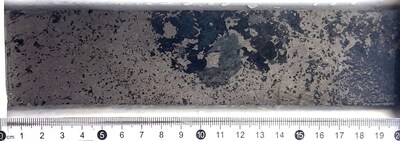
Drilled with a dip of 60⁰ from north to south in the center of the gravity high, the hole intercepted 11 sulphide-rich zones (see cross-section, Figure 10) predominantly comprising sulphide-matrix breccias with some massive sulphide intervals (Figure 5). Collectively, these zones represent an accumulated thickness of approximately 35.0m over an interval of approximately 79.0m.
The intervals between the sulphide-rich zones comprise strongly altered rock, locally suggesting an association with the orthopyroxenites of the Luanga complex. The hole finished in a Fe-Ca-K metasomatic zone, with a strong magnetic response from the high magnetite content. Complete assays for DDH25LU292 are reported at the end of this section. Overall, assays defined 5 main intercepts with average Ni grades ranging from 0.13% up to 0.42% and Cu from 0.12% to 0.35%.
Drill Hole DDH25LU293
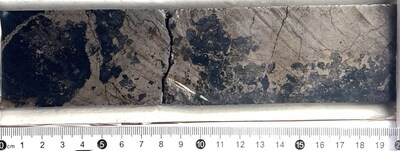
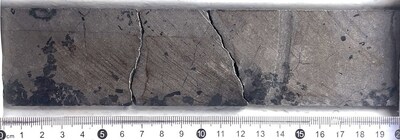
Drilled on the same section as DDH25LU292, approximately 25m to the north (down dip), the hole intercepted a similar geological scenario to DDH25LU292 (see cross-section, Figure 10) with 10 distinct sulphide-rich zones (Figure 6) associated with brecciation and locally massive sulphide (Figure 7) intervals. Collectively, these zones cumulatively amount to approximately 17.0 metres of more intense mineralization over a 63.5m interval, including intervening low sulphide zones. As with DDH25LU292, the hole also terminated in the Fe-Ca-K metasomatic zone at depth. Overall, assays defined 4 main intervals, with Ni grades ranging from 0.17% to 1.33% and Cu grades from 0.31% up to 0.47%.
Drill Hole DDH25LU294
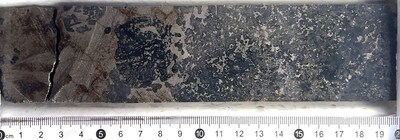
Drill Hole DDH25LU294 was drilled on the same section as DDH25LU292 and DDH25LU293, as a scissor hole, oriented to the north (see cross-section, Figure 10). As with the prior drill holes, eight sulphide-rich zones (Figure 8) were intersected. Locally, sulphide intervals ranged from 6m to 8m in thickness, with a cumulative thickness of approximately 32m of more intense mineralization across a mineralized zone approximately 75m wide. As in the earlier holes, drilling terminated within the basal Fe-Ca-K metasomatic zone. The main Ni/Cu intercepts have returned average grades ranging from 0.32% up to 0.60% Ni, and Cu from 0.13% to 0.33%.
Drill Hole DDH25LU295
Drilled approximately 50m to the south (down dip) of DDH25LU294, the hole intercepted seven sulphide-rich zones (Figure 9), mostly comprised of sulphide-matrix breccias with minor massive sulphide. Collectively, these zones represent a approximately cumulative thickness of 34.0m of more intense mineralization within an interval of approximately 44m (see cross-section, Figure 8).
The intervening zones between the sulphide-rich intervals are relatively narrow in thickness (0.8m to 2.7m), hosted by a strongly altered rock associated with the Luanga orthopyroxenite. Three main Ni/Cu intervals returned average Ni grades ranging from 0.19% up to 0.40%, with Cu grades ranging from 0.23% up to 0.27%.
Drill Hole DDH25LU296
Down dip of DDH25LU293, the hole intercepted two sulphide-rich zones associated with brecciation and massive sulphide intervals, cumulatively representing approximately 1.4m of mineralization within an interval of 2.8m, with low sulphide Fe-Ca-K alteration between the sulphide-rich zones.
Drill Hole DDH25LU297
DDH25LU297 was drilled on a new section, 50m west of previous drilling section, to test the lateral extension of the EM Conductor. The hole intersected one main Ni/Cu mineralized interval grading 0.26% Ni and 0.71% Cu over a 1.0m interval.
Drill Hole DDH25LU298
Drill hole DDH25LU298 was drilled approximately 50m south (down dip) of DDH25LU295 (see cross-section, Figure 8). Five sulphide-rich zones were intersected, mostly comprised of sulphide-matrix breccias and minor massive sulphide. Assay results show six main Ni/Cu intervals with average Ni grades ranging from 0.21% to 0.55%, and Cu grades ranging from 0.16% to 0.32%.
Drill Hole DDH25LU299
Drill hole DDH25LU299 was located 50m east of DDH25LU295 and intercepted an unmineralized dolerite dyke from surface to end of the hole. The dolerite dyke is post-mineralization and intrudes the deep structure that controls the eastern border of the Luanga complex. No samples were submitted for chemical analyses.
Drill Hole DDH25LU300
Drill hole DDH25LU3008 was drilled approximately 40m east of DDH25LU292. The drill hole commenced within a dolerite dyke, as observed in DDH25LU299 and, at approximately 85m downhole, entered the basal Fe-Ca-K metasomatic zone, which continued to the end of hole.
Comparison with the Bushveld Igneous Complex ("BIC")
Within the Bushveld Igneous Complex in South Africa, ultramafic pipe-like nickeliferous and PGM intrusions- occur within the ultramafic Lower Zone footwall sequence, related to the emplacement of the BIC, but are not directly related to the major layered PGM "reefs" in the BIC. These occurrences provide relevant geological analogues for the Ni/Cu-PGM mineralization as reported here at Babylon, proximal to, but genetically separate from the stratiform Luanga PGM mineralization. Accordingly, exploration at Luanga will also pursue the potential for this type of mineralization within the footwall sequence, in addition to the established stratiform layered mineralization that has been prospected to date at Luanga.
Drilling & Trenching Status Update
A total of 404 drill holes has been completed by Bravo to date, for 85,935 metres, including 8 metallurgical holes (not subject to routine assaying). Results have been reported for 365 Bravo drill holes to date. Assay results for 31 holes are currently outstanding (excluding the metallurgical holes). A total of 58 trenches has been completed to date (for 10,901 metres), with results from 6 exploration trenches pending.
Complete Table of Recent Intercepts
HOLE-ID | From
(m) | To
(m) | Thickness
(m) | Au
(g/t) | Pt
(g/t) | Pd
(g/t) | Rh
(g/t) | Ni (%)
Sulphide | Cu (%)
Sulphide | PGM+Au
(g/t) | TYPE |
DDH25LU292 | 7.00 | 14.10 | 7.10 | 0.03 | 0.26 | 0.72 | 0.022 | 0.13 | 0.12 | 1.04 | OX |
And | 20.30 | 56.70 | 36.40 | 0.11 | 0.18 | 0.54 | 0.040 | 0.40 | 0.16 | 0.86 | FR |
Including | 27.17 | 32.05 | 4.88 | 0.09 | 0.37 | 1.06 | 0.068 | 1.07 | 0.21 | 1.59 | FR |
And | 59.81 | 67.46 | 7.65 | 0.35 | 0.17 | 0.40 | 0.037 | 0.23 | 0.35 | 0.96 | FR |
And | 79.32 | 83.30 | 3.98 | 0.03 | 0.11 | 0.73 | 0.083 | 0.42 | 0.20 | 0.95 | FR |
And | 87.41 | 100.67 | 13.26 | 0.04 | 0.09 | 0.42 | 0.046 | 0.29 | 0.15 | 0.59 | FR |
DDH25LU293 | 0.00 | 5.00 | 5.00 | 0.02 | 0.34 | 0.67 | 0.117 | NA* | NA* | 1.14 | OX |
And | 23.15 | 25.15 | 2.00 | 0.05 | 0.47 | 0.40 | 0.010 | 0.17 | 0.35 | 0.93 | FR |
And | 32.57 | 36.17 | 3.60 | 0.08 | 0.34 | 1.24 | 0.054 | 1.33 | 0.47 | 1.71 | FR |
And | 38.34 | 46.25 | 7.91 | 0.08 | 0.10 | 0.63 | 0.040 | 0.34 | 0.36 | 0.85 | FR |
And | 65.35 | 68.20 | 2.85 | 0.32 | 0.05 | 0.48 | 0.059 | 0.35 | 0.31 | 0.91 | FR |
DDH25LU294 | 4.00 | 6.00 | 2.00 | 0.04 | 0.45 | 0.77 | 0.006 | NA* | NA* | 1.26 | OX |
And | 21.50 | 27.90 | 6.40 | 0.12 | 0.26 | 1.11 | 0.037 | 0.60 | 0.22 | 1.52 | FR |
Including | 21.50 | 23.55 | 2.05 | 0.20 | 0.08 | 1.71 | 0.030 | 1.25 | 0.28 | 2.02 | FR |
And | 36.80 | 48.75 | 11.95 | 0.07 | 0.11 | 0.44 | 0.040 | 0.32 | 0.13 | 0.66 | FR |
And | 62.58 | 66.27 | 3.69 | 0.14 | 0.22 | 0.73 | 0.065 | 0.56 | 0.27 | 1.16 | FR |
And | 69.09 | 81.10 | 12.01 | 0.14 | 0.17 | 0.54 | 0.052 | 0.36 | 0.33 | 0.90 | FR |
DDH25LU295 | 0.00 | 11.00 | 11.00 | 0.04 | 0.19 | 0.55 | 0.014 | NA* | NA* | 0.79 | OX |
And | 22.45 | 27.45 | 5.00 | 0.12 | 0.71 | 0.69 | 0.036 | 0.19 | 0.25 | 1.55 | FR |
And | 43.45 | 47.45 | 4.00 | 0.06 | 0.27 | 0.37 | 0.038 | 0.09 | 0.05 | 0.74 | FR |
And | 70.21 | 101.00 | 30.79 | 0.06 | 0.15 | 0.53 | 0.084 | 0.34 | 0.27 | 0.82 | FR |
Including | 70.21 | 79.14 | 8.93 | 0.10 | 0.26 | 0.74 | 0.164 | 0.55 | 0.25 | 1.27 | FR |
And | 105.41 | 114.85 | 9.44 | 0.13 | 0.14 | 0.53 | 0.088 | 0.40 | 0.23 | 0.89 | FR |
DDH25LU296 | 89.57 | 93.30 | 3.73 | 0.10 | 0.03 | 0.21 | 0.116 | 0.35 | 0.11 | 0.46 | FR |
DDH25LU297 | 17.00 | 20.00 | 3.00 | 0.03 | 1.31 | 1.98 | 0.113 | NA* | NA* | 3.43 | OX |
And | 71.80 | 93.25 | 21.45 | 0.03 | 0.69 | 0.75 | 0.068 | 0.15 | 0.09 | 1.54 | FR |
And | 160.20 | 161.20 | 1.00 | 0.06 | 0.05 | 0.31 | 0.002 | 0.26 | 0.71 | 0.42 | FR |
DDH25LU298 | 6.00 | 16.00 | 10.00 | 0.01 | 0.47 | 0.95 | 0.032 | NA* | NA* | 1.46 | OX |
And | 24.35 | 27.35 | 3.00 | 0.03 | 0.39 | 1.54 | 0.007 | 0.55 | 0.32 | 1.97 | FR |
And | 30.03 | 32.55 | 2.52 | 0.06 | 0.53 | 1.24 | 0.009 | 0.43 | 0.21 | 1.85 | FR |
And | 35.55 | 39.55 | 4.00 | 0.04 | 0.39 | 1.06 | 0.004 | 0.32 | 0.18 | 1.49 | FR |
And | 43.55 | 49.55 | 6.00 | 0.10 | 0.30 | 0.59 | 0.003 | 0.21 | 0.30 | 0.99 | FR |
And | 81.30 | 92.87 | 11.57 | 0.04 | 0.16 | 0.55 | 0.073 | 0.37 | 0.32 | 0.82 | FR |
And | 100.15 | 106.15 | 6.00 | 0.02 | 0.16 | 0.43 | 0.016 | 0.25 | 0.16 | 0.62 | FR |
And | 122.00 | 126.00 | 4.00 | 0.11 | 0.31 | 0.53 | 0.001 | 0.07 | 0.06 | 0.95 | FR |
DDH25LU299 | This hole was not analysed (dolerite dyke) |
DDH25LU300 | 103.55 | 104.55 | 1.00 | 0.01 | 1.11 | 0.15 | 0.001 | 0.07 | 0.02 | 1.28 | FR |
DDH26LU330 | 202.55 | 204.35 | 1.80 | 0.01 | 0.40 | 0.87 | 0.03 | 1.41 | 0.29 | 1.30 | FR |
And | 215.33 | 220.30 | 4.97 | 0.03 | 0.25 | 0.98 | 0.03 | 1.00 | 0.37 | 1.28 | FR |
Including | 215.33 | 218.00 | 2.67 | 0.05 | 0.42 | 1.60 | 0.04 | 1.75 | 0.68 | 2.11 | FR |
Notes: All 'From', 'To' depths, and 'Thicknesses' are downhole. * Not Analysed |
Given the currently unknown orientation of mineralization, the relative true thickness cannot be estimated. |
Type: FR = Fresh Rock. Recovery methods and results will differ based on the type of mineralization. |
About Bravo Mining Corp.
Bravo is a Canadian and Brazil-based mineral exploration and development company focused on advancing its PGM+Au+Ni deposit while also exploring for IOCG-style Cu+Au and magmatic-style Ni+Cu+/-PGM+/-Au mineralization within its Luanga Project in the Carajás Mineral Province, Pará State, Brazil. Bravo is one of the most active explorers in Carajás.
The team, comprising of local and international geologists, has a proven track record of PGM, nickel, and copper discoveries in the region. They have successfully taken a past IOCG greenfield project from discovery to development and production in the Carajás while defining other significant deposit types in the region.
The Luanga Project is situated on mature freehold farming land and benefits from being located close to operating mines and a mining-experienced workforce, with excellent access and proximity to existing infrastructure, including road, rail, and hydroelectric grid power. Bravo's current Environmental, Social and Governance activities include planting more than 55,000 high-value trees in and around the project area and hiring and contracting locally.
Technical Disclosure
Technical information in this news release has been reviewed and approved by Simon Mottram, F.AusIMM (Fellow Australian Institute of Mining and Metallurgy), President of Bravo Mining Corp. who serves as the Company's "qualified person" as defined in National Instrument 43-101 Standards of Disclosure for Mineral Projects ("NI 43-101"). Mr. Mottram has verified the technical data and opinions contained in this news release.
For further information about Bravo, please visit www.bravomining.com
Neither TSX Venture Exchange nor its Regulation Services Provider (as that term is defined in policies of the TSX Venture Exchange) accepts responsibility for the adequacy or accuracy of this release.
Forward Looking Statements.
This news release contains forward-looking information which is not comprised of historical facts. Forward-looking information is characterized by words such as "potential", "highlight", "significant", "high-grade", "ramping up", "commencement", "may", minor", "planned", "expand", "strengthen", "evidence", "substantial" variants of these words and other similar words, phrases, or statements that certain events or conditions "may" or "will" occur. This news release contains forward-looking information and interpretations pertaining to the Company's ongoing drill programs and the results thereof; the potential for new and/or different styles of mineralization in some areas, including magmatic Ni/Cu (+/- PGM) mineralization and IOCG style, the presence of which is publicly well documented in the Carajás mineral province; whether or not, were a magmatic sulphide mineral reserve to be defined, such magmatic sulphides could be processed in the same flotation plant as the PGM+Au+Ni sulphides comprising the mineral resource, and the recoveries, and capital and operating cost of such; the potential continuity of mineralization between holes and across target areas; the potential for economically significant Ni/Cu (+/- PGM), PGM+Au+Ni and/or Cu/Au mineralization; the interpretation of sulphide mineralization, visual mineral identification, geological observations and geophysical responses, including magnetic, EM, IP, gravity and BHEM survey results, and whether such observations are indicative of mineralization; whether mineralization identified as magmatic is indeed so, or some other style of mineralization, whether the mineralization identified is open to expansion or not; whether the other anomalies are related to mineralization; whether current and future interpreted geophysical anomalies point to or represent economically significant mineralization; the prospectivity of the Babylon target and other Luanga-related exploration targets; the Company's ability to identify, prioritize and advance additional exploration prospects beyond the current Luanga PGM+Au+Ni deposit; whether the planned IP program will identify mineralization and, of so, whether such mineralization will be of economic interest; the commencement, execution, timing, scope, cost and results of current and future exploration programs, including the 50km IP survey program, BHEM surveying and Cu/Au focused exploration activities and the Company's plans in respect thereof. Forward-looking information involves risks, uncertainties and other factors that could cause actual events, results, and opportunities to differ materially from those expressed or implied by such forward-looking information. Factors that could cause actual results to differ materially from such forward-looking information include, but are not limited to, unexpected results from exploration programs, changes in the state of equity and debt markets, fluctuations in commodity prices, delays in obtaining required regulatory or governmental approvals, environmental risks, limitations on insurance coverage; and other risks and uncertainties involved in the mineral exploration and development industry. Forward-looking information in this news release is based on the opinions and assumptions of management considered reasonable as of the date hereof, including, but not limited to, the assumption that the assay results confirm that the interpreted along strike and up and down dip; that activities will not be adversely disrupted or impeded by regulatory, political, community, economic, environmental and/or healthy and safety risks; that the Luanga Project will not be materially affected by potential supply chain disruptions; and general business and economic conditions will not change in a materially adverse manner. Although the Company believes that the assumptions and factors used in preparing the forward-looking information in this news release are reasonable, undue reliance should not be placed on such information. The Company disclaims any intention or obligation to update or revise any forward-looking information, other than as required by applicable securities laws.
Schedule 1: Drill Hole Location Details
HOLE-ID | Company | East (m) | North (m) | RL (m) | Datum | Depth (m) | Azimuth | Dip | Sector |
DDH25LU292 | Bravo | 660000.06 | 9342534.53 | 257.75 | SIRGAS2000_UTM_22S | 161.85 | 180 | -60 | North |
DDH25LU293 | Bravo | 660000.01 | 9342560.04 | 252.91 | SIRGAS2000_UTM_22S | 201.20 | 180 | -60 | North |
DDH25LU294 | Bravo | 659999.99 | 9342465.48 | 267.49 | SIRGAS2000_UTM_22S | 151.20 | 360 | -60 | North |
DDH25LU295 | Bravo | 659999.98 | 9342415.33 | 266.52 | SIRGAS2000_UTM_22S | 181.55 | 360 | -60 | North |
DDH25LU296 | Bravo | 660000.01 | 9342634.91 | 244.01 | SIRGAS2000_UTM_22S | 180.50 | 180 | -60 | North |
DDH25LU297 | Bravo | 659950.03 | 9342415.11 | 271.62 | SIRGAS2000_UTM_22S | 175.60 | 360 | -60 | North |
DDH25LU298 | Bravo | 660000.00 | 9342365.35 | 266.52 | SIRGAS2000_UTM_22S | 160.60 | 360 | -60 | North |
DDH25LU299 | Bravo | 660050.02 | 9342415.22 | 265.24 | SIRGAS2000_UTM_22S | 99.50 | 360 | -60 | North |
DDH25LU300 | Bravo | 660039.99 | 9342539.82 | 254.73 | SIRGAS2000_UTM_22S | 150.35 | 180 | -60 | North |
DDH26LU330 | Bravo | 659950.37 | 9342025.01 | 267.36 | SIRGAS2000_UTM_22S | 274.80 | 90 | -60 | North |
Schedule 2: Assay Methodologies and QAQC
Samples follow a chain of custody between collection, processing, and delivery to the SGS laboratory in Parauapebas, state of Pará, Brazil. The drill core is delivered to the core shack at Bravo's Luanga site facilities and processed by geologists who insert certified reference materials, blanks, and duplicates into the sampling sequence. Drill core is half cut and placed in secured polyurethane bags, then in security-sealed sacks before being delivered directly from the Luanga site facilities to the Parauapebas SGS laboratory by Bravo staff. Additional information about the methodology can be found on the SGS Geosol website (SGS) in their analytical guides. Information regarding preparation and analysis of historic drill core is also presented in the table below, where the information is known.
Quality Assurance and Quality Control ("QAQC") is maintained internally at the lab through rigorous use of internal certified reference materials, blanks, and duplicates. An additional QAQC program is administered by Bravo using certified reference materials, duplicate samples and blank samples that are blindly inserted into the sample batch. If a QAQC sample returns an unacceptable value an investigation into the results is triggered and when deemed necessary, the samples that were tested in the batch with the failed QAQC sample are re-tested.
Bravo SGS Geosol |
Preparation | Method | Method | Method | Method |
For All Elements | Pt, Pd, Au | Rh | Sulphide Ni Cu | Trace Elements |
PRPCLI (85% at 200#) | FAI515, FAI34V | FAI30V | AA04B | ICP40B |
SOURCE Bravo Mining Corp.

 View original content to download multimedia: http://www.newswire.ca/en/releases/archive/May2026/19/c0572.html
Luis Azevedo, Chairman and CEO or Alex Penha, EVP Corporate Development, T: +1-416-509-0583, info@bravomining.com