PITTSBURGH, PA / ACCESS Newswire / November 12, 2026 / Originally published in Wesco's 2026 Sustainability Report
Our Transportation Fleet
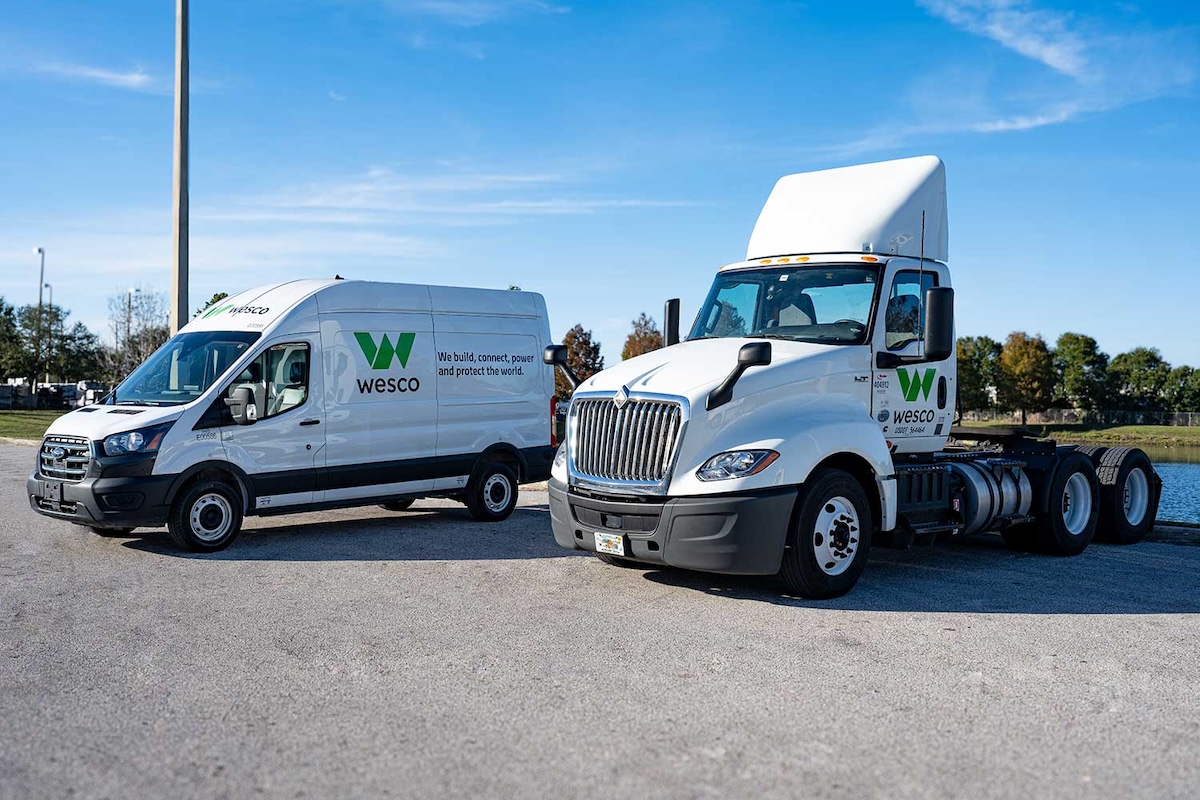
Our transportation operations - which primarily includes approximately 3,300 vehicles in the U.S. and Canada - represent our secondary emissions source. Every vehicle purchase decision evaluates available fuel-efficient models, establishing efficiency as a baseline requirement.
Route Optimization
Smart logistics reduce both emissions and costs. As of 2025, over 230 distribution centers and fulfillment centers have deployed route planning software, optimizing delivery schedules to eliminate unnecessary miles while maintaining service excellence. Every mile not driven is fuel saved and emissions avoided.
Driver Training and Policies
Driver behavior can significantly impact fuel consumption. Our comprehensive training program covers practical efficiency techniques: gradual acceleration, proper tire pressure maintenance, timely preventative maintenance schedules and optimal route selection.
Our idling restrictions establish clear expectations - engines off unless operationally necessary, with limited exceptions for engine warmup and extreme cold conditions. Anti-idling technology is now standard across our fleet.
Fleet Modernization
We are systematically modernizing our transportation fleet to reduce environmental impact, improve operational efficiency and advance our sustainability commitments through the following:
- Company-Leased Vehicle Program: Our multi-year transition from employee-owned to company-leased vehicles for our car fleet continues to advance. Canadian and U.S. employees logging more than 7,500 annual business miles can now choose company-leased vehicles over personal cars. This shift provides greater control over fleet composition and fuel consumption while enabling exploration of electric and alternative fuel options.
- Technology upgrades: We prioritize retiring less-efficient vehicles first while investigating opportunities to improve existing fleet performance through technology upgrades.
Meeting the transportation challenge requires transforming our fleet composition. Beginning in 2026, new sales fleet vehicle purchases in the U.S. and Canada will reflect significantly enhanced efficiency standards:
- Mid-size SUVs: Requiring all new purchases to hybrid models, with electric vehicle (EV) options available for employees seeking maximum emissions reduction.
- Full-size pickups: Transitioning all new purchases entirely to hybrid models.
- Mid-size pickups: Continuing evaluation of efficiency options as technology evolves.
Ethanol blends remain part of our alternative fuel strategy where operationally appropriate, providing additional emissions reduction pathways.
Shipping Partners
Our responsibility extends beyond company-operated vehicles. Through collaboration with third-party shipping partners, Wesco advances sustainability progress while building the foundation for Scope 3 transportation emissions management. Our decision-support initiative, launched in 2024, exposes shipping options across mode, service type and consolidation opportunities, enabling informed decisions that balance operational and environmental priorities. We have begun training sales representatives to present these options to customers, supporting more deliberate shipping choices.
Read Wesco's full 2026 Sustainability Report here
Find more stories and multimedia from Wesco International at 3blmedia.com.
Contact Info:
Spokesperson: Wesco International
Website: https://www.3blmedia.com/profiles/wesco-international
Email: info@3blmedia.com
SOURCE: Wesco International
View the original press release on ACCESS Newswire

© 2026 Canjex Publishing Ltd. All rights reserved.