NORTHAMPTON, MA / ACCESS Newswire / September 17, 2026 / By Catharine Grimes, Abhishek Shankar //05 August 2026
Originally published on Devex
Consider a patient: a woman in her forties who lives in Delhi and has never smoked. Neither has anyone in her family. She is aware that India's cities carry high levels of air pollution. She has also read that low-dose computed tomography, or LDCT, scanning can detect lung cancer early, when treatment is most effective. She goes to a clinic and asks whether she should be screened.
The honest answer to her question today would be: We don't know.
It is not because the science of lung cancer screening is immature. Two landmark trials, the U.S. National Lung Screening Trial and the Dutch-Belgian NELSON study, established lung cancer screening guidelines for people with a past or current history of smoking in high-income settings. Low-dose CT screening is now established in more than a dozen countries, with additional nations preparing to implement.
The reality is that current lung cancer screening eligibility criteria were not designed to consider nonsmokers or to capture risk across cultures and living conditions. This includes risk in India or other geographies with sustained PM2.5 exposure - fine particulate matter that can penetrate the lungs and further enter the body through the bloodstream, affecting all major organs. What we do know is that between 40% and 50% of patients living with lung cancer in India are never-smokers.
Lung cancer incidence in India is rising. Peer-reviewed forecasts project that trend will continue through at least 2030, with incidence rates already accelerating sharply across multiple regions. When diagnosed, the majority of patients present with disease that has already spread. Lung cancer in India also tends to present approximately a decade earlier than the global average, a reality that makes early detection an urgent problem.
The question that the female patient in Delhi asked- "Should I be screened?"- remains scientifically unanswered. It is the question driving two landmark research grants now underway at the All India Institute of Medical Sciences, or AIIMS, funded by the Bristol Myers Squibb Foundation.
What's more, India's answer could offer guidance for other countries facing the same question.
Quantifying air pollution as a lung cancer risk factor
Globally, air pollution is now estimated to be responsible for approximately 14%of all lung cancers. What is not yet established, particularly with the rigor required to inform national lung cancer screening policy, is the full picture of PM2.5's role in India's lung cancer burden. Understanding that picture requires distinguishing three related but separate questions: how carcinogenic PM2.5 exposure is in the Indian context (its inherent capacity to cause malignant cancer); what level of risk that exposure confers across India's population (the quantified probability of developing the disease); and which individuals carry the greatest biological susceptibility to those exposures. It is also unresolved how PM2.5 interacts with other co-occurring risk factors, and what genetic signatures it produces. Each of these gaps must be closed before a scientifically defensible, India-specific screening policy can be effectively and sustainably built.
The first BMS Foundation-funded grant with AIIMS, the Air Pollution and Cancer Research Ecosystem, or AIRCARE, is designed to address those unknowns. Working from a cohort of approximately 3,200 participants across the Delhi National Capital Region, AIRCARE will: quantify the lung cancer risk associated with PM2.5 exposure; map its multiplicative interaction with behavioral and clinical risk factors; identify PM2.5-specific genomic signatures via next-generation sequencing; and define susceptible subpopulations. The output will be a validated and locally generated risk stratification model grounded in the impact of air quality on local Indian people.
The second grant - the Indian Lung Screening Trial - addresses a foundational question the existing evidence cannot answer: Does LDCT screening, developed and validated in high-income countries using smoking history as the primary eligibility criterion, have the same efficacy in India?
By screening 1,716 participants across 10 national institutions, the trial evaluates LDCT screening yield and staging outcomes in India's context - generating the first locally grounded evidence of its effectiveness in India. Real-world evidence from other settings has confirmed that when screening shifts diagnosis to earlier stages, survival improves significantly - but whether that stage shift can occur under India's conditions, for India's patients, remains unproven. The trial will also assess, for those who screen positive, whether the care pathways exist to act on what screening finds: from diagnostic workup and molecular testing to surgical access and follow-up. Together, those two outputs will offer a blueprint for how LDCT screening can be responsibly integrated into India's public health system.
AIRCARE and the Indian Lung Screening Trial are interdependent. A risk stratification model without a validated detection pathway has no operational home. A detection program without a locally grounded risk model cannot fully account for the range of patients who need it most.
Why India, and why now
The Bristol Myers Squibb Foundation's investment in this work reflects a conviction that durable progress in cancer outcomes comes from locally led solutions, grounded in country context, and designed to strengthen the systems that sustain them. The evidence being generated at AIIMS for Indian patients, by Indian researchers, within the Indian health system will provide evidence the world does not yet have.
India's national readiness is real. The Indian Ministry of Health and Family Welfare published evidence-based national lung cancer treatment guidelines, and these plans will require precisely the kind of locally generated, population-specific evidence that AIRCARE and the Indian Lung Screening Trial are designed to produce - screening guidelines.
Since the Indian Lung Screening Trial and AIRCARE were registered on clinical trial databases this year, researchers from countries facing identical questions have reached out to AIIMS seeking to replicate it in their own settings.
The question a patient in Delhi is asking today is the same question being asked in regions around the world. AIRCARE and the Indian Lung Screening Trial are working to help provide the answer.
Visit Strengthening Care Systems - a series in collaboration with the Bristol Myers Squibb Foundation on raising awareness of the scale of the global lung cancer burden and the systems-level changes required to address it.
About the authors

Catharine Grimes
Catharine Grimes serves as president of the Bristol Myers Squibb Foundation, an independent charitable organization committed to improving global health by strengthening local health systems. With more than 30 years of experience in the pharmaceutical and health care sector, she leads the foundation's efforts across adult cancers, pediatric cancers and blood disorders, brain health, and clinical trials. Under Catharine's leadership, the BMS Foundation focuses on capacity building and health systems strengthening programs, working with grantee partners to expand access to care and advance sustainable, community‑driven solutions for patients around the world.

Abhishek Shankar
Dr. Abhishek Shankar is a member of faculty in the department of Radiation Oncology at the All India Institute of Medical Sciences in Delhi, India, an institute of national importance under the Ministry of Health and Family Welfare of India. He serves on the WHO/IARC Lung Cancer Screening Handbook group, the IASLC Tobacco Control and Smoking Cessation Committee, the Lancet Commission, the Lung Cancer Policy Network and ASPIRE for Lung Cancer. He leads Indian Lung Screening Trial and AIRCARE, generating evidence on screening beyond smoking and environmental risk factors in LMICs. Shankar's primary expertise and research interests span community-based cancer prevention and screening, global oncology, cancer policy, quality of living in cancer care, and tobacco control
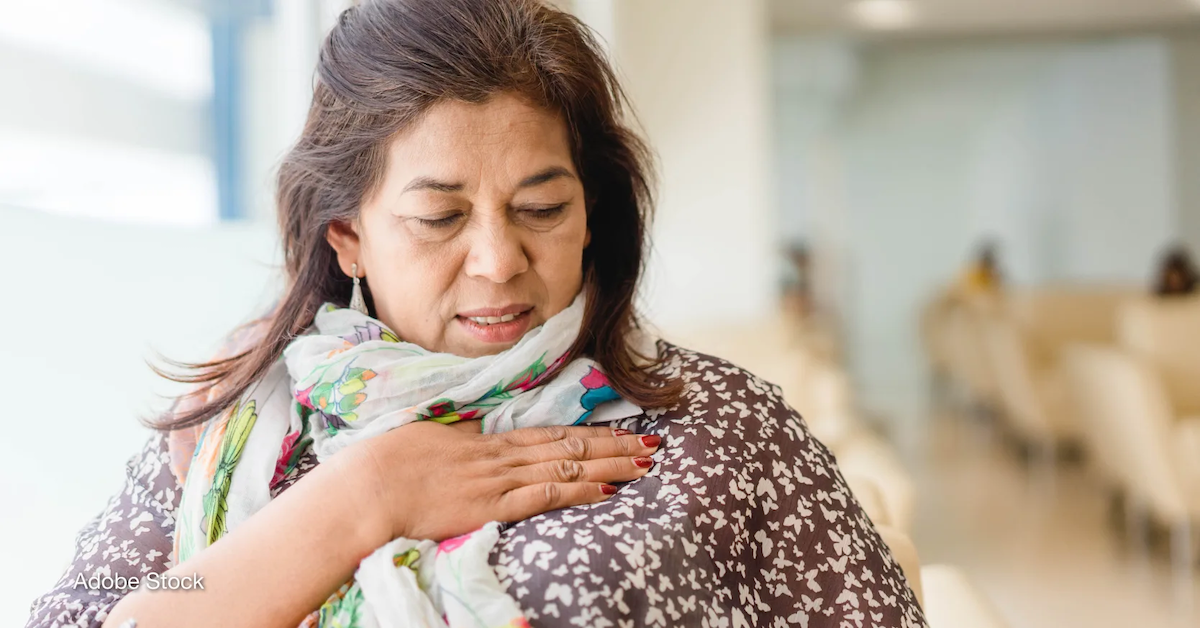
A woman stands in a clinic at a cancer checkup in India. Photo by: Adobe Stock
Find more stories and multimedia from Bristol-Myers Squibb Company at 3blmedia.com.
Contact Info:
Spokesperson: Bristol-Myers Squibb Company
Website: https://www.3blmedia.com/profiles/bristol-myers-squibb-company
Email: info@3blmedia.com
SOURCE: Bristol-Myers Squibb Company
View the original press release on ACCESS Newswire

© 2026 Canjex Publishing Ltd. All rights reserved.