Toronto, Ontario--(Newsfile Corp. - November 5, 2026) - First Lithium Minerals Corp. (CSE: FLM) (OTC Pink: FLMCF) (FSE: X28) ("First Lithium Minerals" or the "Company") is pleased to report the results of the winter sedimentary brine geochemical sampling program conducted at the Ascotan project ("Ascotan" or "Project") in the Salar de Ascotan, Antofagasta Region, Chile.
The sedimentary brine geochemical winter program conducted in August 2026 involved the collection of brine samples from sixty (60) drill holes taken at a target depth of between 1.0 m and 1.5 m below surface using a portable manual auger drill system. The selection of this methodology was based on technical criteria aimed at providing rapid, efficient, and environmentally friendly access to the interstitial fluids of shallow brine while maintaining strict methodological consistency and interoperability with previous sampling carried out at the project in the summer ensuring the direct comparability of historical and current analytical results (Figure 1).
The campaign was designed to expand the hydrogeochemical database of the sedimentary brine in the winter season and to capture variations in the upper brine zone which is highly sensitive to seasonal climatic changes. The campaign improved the spatial and compositional characterization of the sedimentary lithium-enriched brines within the evaluated mining concessions and provided sufficient exploration evidence to prioritize sectors for follow-up hydrogeochemical and hydrogeological investigations.
During the winter months, solar radiation decreases significantly and ambient temperatures drop below freezing in the Andean salars. Surface evaporation is thus minimized, halting the natural brine concentration cycle. Lower ambient temperatures in the winter trigger changes in the thermodynamic equilibrium of certain salt phases. Morning frosts, occasional snowfall, surface thawing, and low-salinity meteoric water infiltrate the upper layer of the salt crust and shallow brine table causing an immediate local dilution effect (Figure 2).
The winter collection sedimentary brine sampling reported analytical database comprised of 60 assays with concentrations ranging from 34 to 348 mg/L (Li), with a mean lithium concentration of 137 mg/L (Li) and a median of 129 mg/L (Li). The results confirmed the presence of lithium-bearing brines with significant lithium concentrations within the south-central sectors of the project. The principal hydrogeochemical anomaly was located in the southern sector of the sampled area, where samples reported concentrations ranging from 197 to 348 mg/L (Li) (Figure 3).
The occurrence of multiple consecutive high-Li values in the southern and central sectors of the salar, concurrently with the sedimentary brine geochemical results collected in the summer program (Ref. Press release: "First Lithium Reports up to 1,300 mg/L Lithium in Brine Samples at Ascotan Project", June 9, 2026) indicates a spatially coherent enrichment and could represent another principal exploration target.
Preliminary hydrogeological modelling in the northeastern sector of the project suggests a gradually increasing brine signature starting at approximately 200 m beneath the surface with widths up to 400 meters reaching a consolidated lacustrine base or bedrock at approximately 600 m at depth. The results from the winter and summer sedimentary brine sampling programs increase confidence in the probability of lithium containing brines at the highly conductive horizontal zones that had displayed promising geophysical characteristics based on the Transient Electromagnetic (TEM) and Magneto-Telluric (MT) geophysical surveys conducted in Q4/22 and Q1/23 (Ref. Press release: "First Lithium Minerals Reports Positive Results from MT Survey", March 1, 2023).
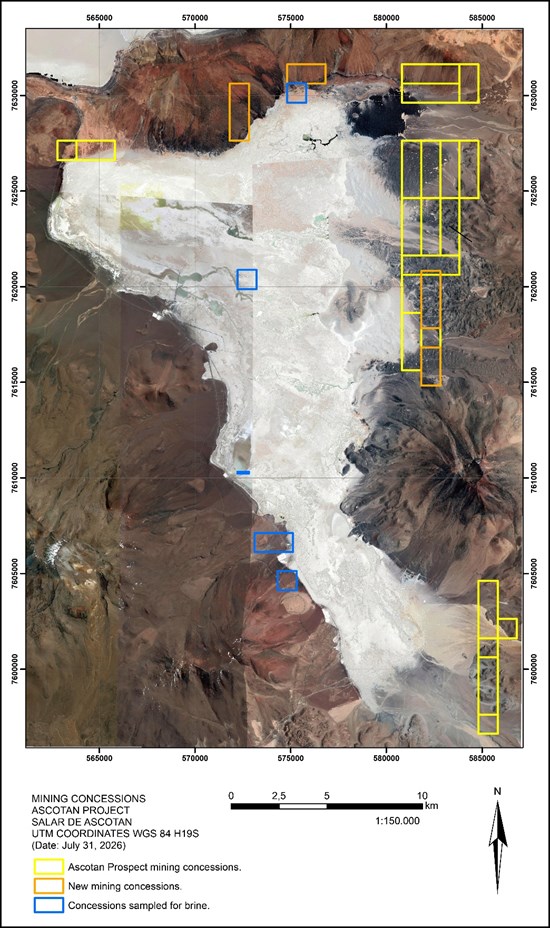
Figure 1. Location of sedimentary brine samples taken during the winter program, August 2026
To view an enhanced version of this graphic, please visit:
https://images.newsfilecorp.com/files/3968/322655_3636afbe04b2a8c6_002full.jpg
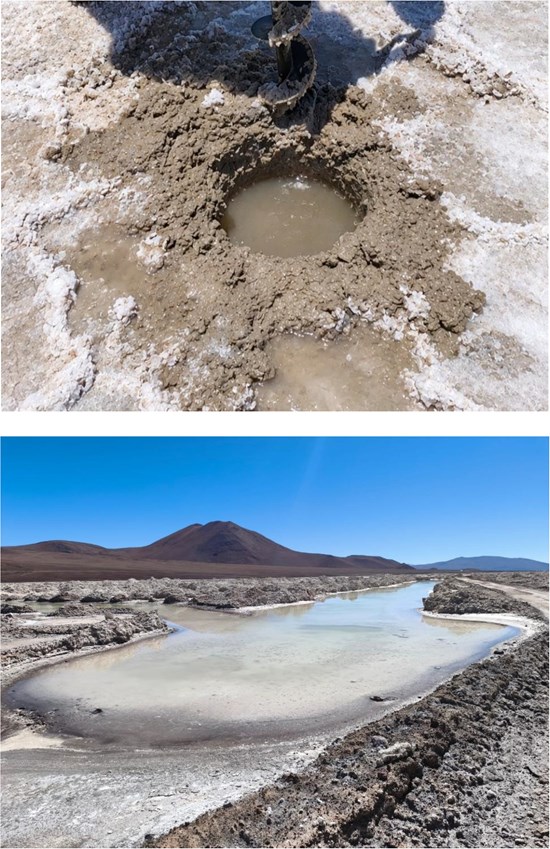
Figure 2. Augur drillhole; minimized surface evaporation; reduction and dilution effect in the winter season; August 2026
To view an enhanced version of this graphic, please visit:
https://images.newsfilecorp.com/files/3968/322655_flmtwo.jpg
| Element | Unit | Minimum | Maximum | Mean | Median |
| Li | mg/L | 34 | 348 | 137 | 129 |
| Mg | mg/L | 873 | 4,341 | 1,813 | 1,670 |
| K | mg/L | 692 | 6,701 | 2,660 | 2,500 |
| Ca | mg/L | 623 | 1,207 | 1,029 | 1,044 |
| B | mg/L | 0.2 | 0.9 | 0.4 | 0.3 |
| Na | mg/L | 7,953 | 57,997 | 25,663 | 24,204 |
| Mg/Li | ratio | 12.4 | 25.7 | 14.1 | 13.0 |
Figure 3. Sedimentary brine assays results; winter geochemical sampling program, August 2026
Note: Sedimentary brine samples are selective in nature and may not be representative of the overall mineralization or characteristics of the salar hydrogeology or hydrochemistry from which they were sampled
Rob Saltsman, President & CEO of the Company, commented: "The Ascotan project continues to deliver. Even during winter months, when evaporation rates decline and climatic conditions dilute the near-surface brine, the geochemical program of the shallow sedimentary brine confirmed robust lithium presence. We will continue expanding our hydrogeochemical database across all seasons and locations at the salar. The results also reinforce our belief that highly conductive zones we had identified as a result of the geophysics programs could be associated with lithium brine mineralization typical of the hydrogeologic settings across the Andean plateau. We are looking forward to advance the project to the resource delineation stage."
The Company is expecting to commence a 1,500-meter drilling program in H1/27, conditional upon access to capital and obtaining required government permits, licences, and community agreements.
QA/QC
A semi-systematic grid sampling program was developed within the mining concessions of the Ascotan Project, located in the Ascotan salar, in Antofagasta Region, Chile. The surface exploration campaign was conducted using a portable drilling rig with a 76.2 mm (3-inch) diameter auger bit. This drilling method was selected to minimize disturbance of the halite/sediment matrix and ensure the representativeness of the recovered pore fluids. Brine samples were selectively collected at standardized depth intervals, from 1.0 m to 1.50 m below the surface crust. To prevent evaporation, cross-contamination, or chemical alteration of the brines, the field technical team strictly followed the following sampling protocols. Sample Volume and Containment: a 100 ml aliquot of clear brine was collected from each borehole. The samples were stored in high-density polyethylene (HDPE) bottles, previously rinsed with the target brine. The bottles were filled completely (with no headspace) to minimize oxidation and potential mineral precipitation. Labeling and Thermal Preservation: each sample bottle was immediately sealed with a tamper-evident cap and labeled with a unique, sequential sample identification number. To maintain geochemical stability and suppress biological activity, the samples were stored in temperature-controlled refrigerated containers (portable coolers) at approximately 4°C during field storage and transport. Documentation and Georeferencing: the spatial coordinates of each sampling point were accurately recorded and verified using a GPS device (WGS84 datum). A complete photographic record of each site was also maintained, documenting the open pit, the recovered fluid, and the sealed sample, ensuring a complete audit for quality control and assurance purposes. Chain of Custody: the refrigerated containers remained under the strict supervision of the project geology team until their final shipment to the analytical laboratory, thus ensuring an unbroken chain of custody. The sampling was done in accordance with generally accepted industry standards and included Quality Assurance and Quality Control (QA/QC) standard elements such as including duplicate, CRM, and blank samples. Formal chain of custody documents was prepared for every sample obtained and submitted for laboratory analysis to Andes Analytical Assay, El Totoral 651 Barrio Industrial Buenaventura, Quilicura, Santiago, Chile. Andes Analytical Assay Spa is accredited under the international standard ISO IEC 17025:2017. In the opinion of the QP, sample preparation, security, and analytical procedures were acceptable and results from the laboratory analyses are considered adequate. Sedimentary brine samples are selective in nature and may not be representative of the overall mineralization or characteristics of the salar geology from which they were sampled.
About the Ascotan Project
The Ascotan Project comprises 6,400 ha of mineral exploration concessions located in the Salar de Ascotan in the Antofagasta Region of northern Chile. Salar de Ascotan corresponds to a classic continental closed basin 'saline salar' in the desert environment of the Andean Highlands of northern Chile, with approximately 1,757 km2 of the basin area and 243 km2 of surface area. Project area represented by soft and hard saline crusts and clay playas at the altitude of 3,716 msnm. Mineralization in the Salar de Ascotan project is primarily represented by different fractions comprised of chloride and sulfate brines, dendritic material, consisting of sand, silt and clay intercalated in the salar sediments, and various precipitated salt compounds. The project has a well-developed infrastructure and is accessed 150 km from the town of Calama, Chile via Highway 21 which runs along the western edge of the salar. The railway Ferrocarril de Antofagasta a Bolivia ("FCAB") that passes through the nearby town of Ollague forms the major transportation corridor between the port city of Antofagasta, Chile and the capital city of Bolivia, La Paz. Multiple operating copper mines in the area supplement access to power grid, mining expertise, and qualified labour force. The results of two geophysical surveys developed a preliminary hydrogeological model suggesting a gradually increasing brine signature starting at approximately 200 m beneath the surface with widths up to 400 m reaching a bedrock at approximately 600 m at depth. The Company received environmental approvals and signed a cooperation agreement with the local indigenous community. Based on the priority drill targets assessment, the Company is planning to proceed to its inaugural brine resource exploration program in the northeastern sector of the salar. In 2024, the Chilean government through its National Lithium Strategy identified and approved Salar de Ascotan as a priority salar for lithium exploration and exploitation, aiming to strengthen Chile's position in the global lithium market.
About First Lithium Minerals
First Lithium Minerals is a Canadian mineral exploration and development company. The Company is exploring for lithium and alkali metals at its 100%-owned Ascotan Project comprised of 6,400 ha of mining concessions at the Salar de Ascotan in the Antofagasta Region of northern Chile. Two property-wide geophysical surveys identified priority exploration drill targets for potential brine mineralization. The Company is currently planning its inaugural exploration drilling program. The Company is also exploring for gold at its 100%-owned Lidstone Gold Project comprised of 9,600 ha of mining claims in northwestern Ontario, Canada.
Additional information about the Company is available on the Company's website: www.firstlithium.ca
Qualified Person
Aldo Moreno Salinas is the VP of Exploration for First Lithium Minerals and the Qualified Person ("QP") as defined by National Instrument 43-101 ("NI 43-101") has reviewed and approved the technical content of this press release. Mr. Moreno is a seasoned geologist with 40 years of experience in exploration and evaluation of metallic and non-metallic mineral deposits, has a degree in geology from Universidad de Chile, is a member of the Chilean Professional Association of Geologists No. 437 and registered in the Public Records of Competent Persons No. 328.
Caution Regarding Forward-Looking Statements
This news release contains "forward-looking information" within the meaning of applicable securities laws. Any such forward-looking information may be identified by words such as "expects", "anticipates", "intends", "contemplates", "believes", "projects", "plans", and similar expressions. Readers are cautioned not to place undue reliance on forward-looking information. Forward-looking information is subject to known and unknown risks, uncertainties and other factors that may cause the actual results, level of activity, performance or achievements of the Company to be materially different from those expressed or implied by such forward-looking information, including but not limited to: prospecting and exploration activities, geological, geophysical, and geochemical surveys, its results and interpretation, sedimentary brine sample collection and its results geochemical and/or geological interpretation, studies and interpretations of historical exploration and geological information, drill target definition, permitting, licences, environmental laws and regulations, changes in government regulations and laws, obtaining social licence to explore and operate, community engagements, planning and timing of exploration activities, the discovery and delineation of mineral deposits/resources/reserves, general business, economic, competitive, reliance on third parties, the actual results of operations, and other risks of the natural resources industry. Although the Company has attempted to identify important factors that could cause actual results to differ materially from those contained in forward-looking information, there may be other factors that cause results not to be as anticipated, estimated or intended. The Company disclaims any obligation to update or revise any forward-looking statements information, except in accordance with applicable securities laws. Accordingly, readers should not place undue reliance on forward-looking information.
To view the source version of this press release, please visit https://www.newsfilecorp.com/release/322655

© 2026 Canjex Publishing Ltd. All rights reserved.