- New Air Canada aircraft to feature Glowing Hearted cabin, including lie-flat seats, a first for a Canadian airline on a single-aisle aircraft
- A321XLR is scheduled to make its inaugural international flight on June 15 from Montréal to Toulouse
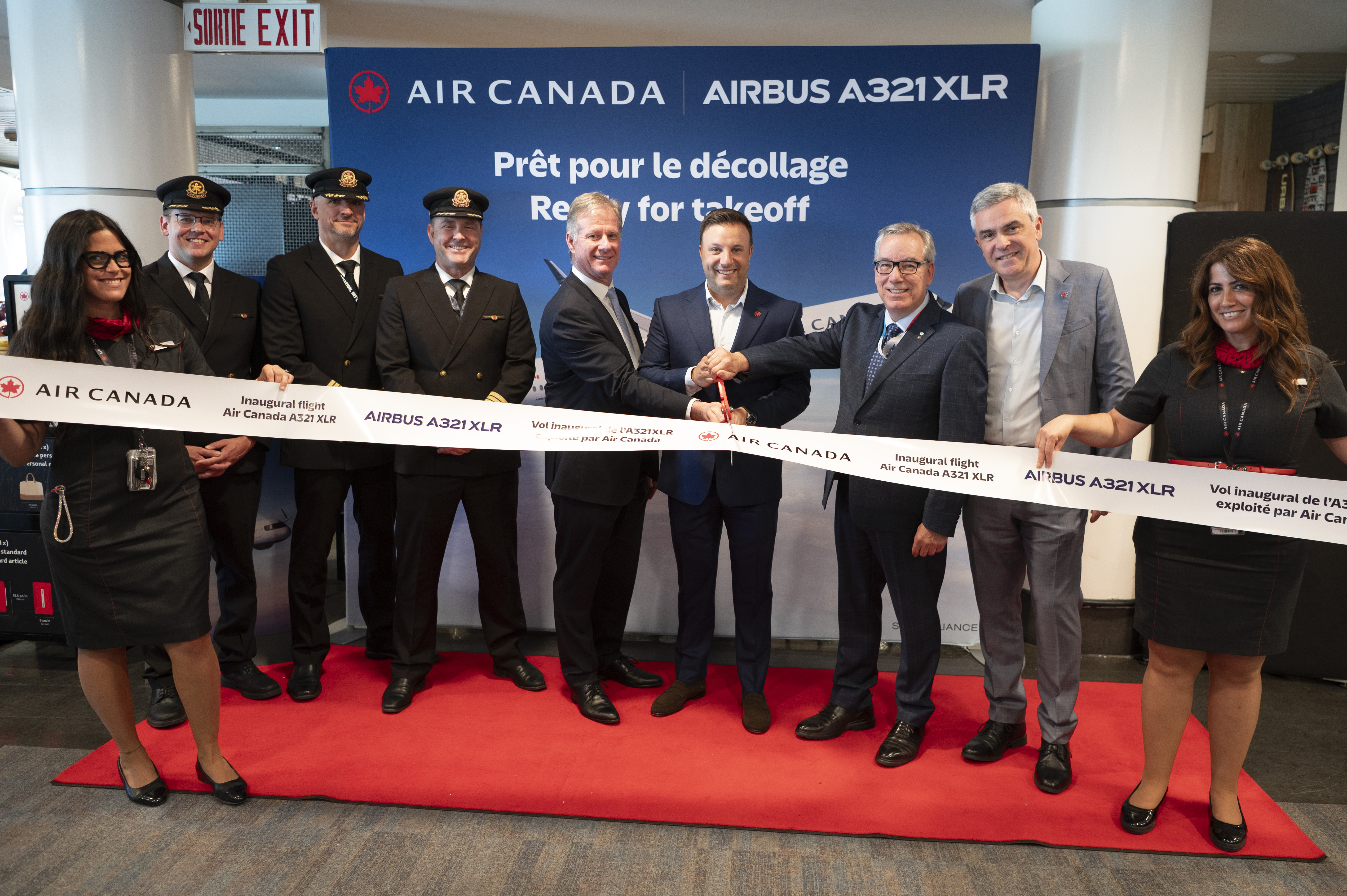
MONTRÉAL, June 09, 2026 (GLOBE NEWSWIRE) -- Air Canada today marked the entry into scheduled service of its first Airbus A321XLR. The 182 passengers onboard AC413 from Montréal to Toronto experienced the start of a whole new chapter in how - and where - Air Canada customers can fly.
“Air Canada is building one of the most capable fleets in the industry. The entry into service of the first Airbus A321XLR marks a transformative moment for Air Canada and the beginning of an exciting new era for our customers, industry partners, and colleagues,” said Mark Galardo, Executive Vice President and Chief Commercial Officer, and President of Cargo at Air Canada. “Today, we celebrate an aircraft that will unlock new destinations, improve service on existing markets, and enhance the onboard experience. For our premium customers, the A321XLR will offer the only lie-flat seats on a single-aisle aircraft for a Canadian carrier as it crosses the Atlantic and connects destinations across North America.”
"ADM Aéroports de Montréal is pleased to mark the official launch of the A321XLR departing from YUL Montréal-Trudeau today. This next-generation aircraft is a core part of the development and expansion of Air Canada and YUL," said Yves Beauchamp, ADM's President and CEO. "This modern and versatile aircraft will open up new markets and strengthen Montréal’s international connectivity, in addition to bringing greater flexibility to existing routes."
“We are thrilled to celebrate this historic milestone alongside our long-standing partner Air Canada. As the first airline in Canada to operate the A321XLR, Air Canada is showcasing true leadership in fleet modernization,” said Colin, Bole, Senior Vice President Customers, North America, Airbus. “This aircraft is the perfect tool to support their network growth, seamlessly bridging the gap between short-haul and long-haul operations while delivering a 30% reduction in fuel burn per seat and the ability to operate with up to 50% neat Sustainable Aviation Fuel. We are proud to see our next-generation technology support Air Canada’s ambitions and operate on both new and already-existing non-stop transatlantic markets like Montréal to Toulouse in a more sustainable way.”
Air Canada’s new Glowing Hearted cabin standard is making its debut on the A321XLR, offering calm, comfort and connectivity to customers. It features personal device power at every seat, fast, free Wi-Fi for Aeroplan Members sponsored by Bell, next-generation in-flight entertainment screens that are larger and offer Bluetooth connectivity, and thoughtfully curated cabin finishes inspired by the Canadian landscape and aligned to the airline’s brand and commitment to enduring quality.
To the 14 lie-flat seats in Air Canada Signature Class, the A321XLR has 168 Economy class seats, with every seat featuring seatback in-flight entertainment with 4K OLED IFE screens (13-inch in Economy, 19-inch in Signature Class) with Bluetooth audio.
The aircraft will operate several domestic flights prior to its first trans-Atlantic flight between Montréal and Toulouse on June 15.
Air Canada plans to integrate the A321XLR into its schedule progressively to support growth across its network. The aircraft’s performance and range characteristics are well suited to adjust for seasonal demand patterns and evolving market opportunities.
The arrival of the A321XLR is an important milestone and the latest step in Air Canada’s multi-year fleet modernization program, which is focused on customer experience, operational resilience and fuel efficiency improvements versus older-generation aircraft. It reflects the airline’s commitment to prudent growth, continuous product investment, and disciplined execution of Air Canada’s business plan. In addition to 30 A321XLRs (15 will be leased, 15 are being acquired directly from Airbus S.A.S) that are expected to enter the fleet over the coming years, Air Canada has announced orders for 14 Boeing 787-10 Dreamliners as well as eight A350-1000s. It also continues to take deliveries of the Canadian-built Airbus A220, with 21 aircraft remaining on its firm order of 65. Five Boeing 737 MAX aircraft have already been delivered in 2026.
About Air Canada
Air Canada is Canada's largest airline, the country’s flag carrier and a founding member of Star Alliance, the world's most comprehensive air transportation network. Headquartered in Montréal, Air Canada provides scheduled service directly to more than 180 airports in Canada, the United States and Internationally on six continents. It holds a Four-Star ranking from Skytrax. Air Canada’s Aeroplan program is Canada’s premier travel loyalty program, with more than 10 million members worldwide. Members can earn or redeem points on the world’s largest airline partner network of more than 50 airlines, plus through an extensive range of merchandise, hotel and car rental partners. Through Air Canada Vacations, it offers a selection of vacation and Flight & Hotel packages, tours, cruises, car rentals, excursions, and a variety of activities and experiences. Its freight division, Air Canada Cargo, provides air freight lift and connectivity to hundreds of destinations across six continents using Air Canada’s passenger and freighter aircraft. Air Canada’s climate-related ambition includes a long-term aspirational goal of net-zero greenhouse gas emissions by 2050. For additional information, please see Air Canada’s TCFD disclosure. Air Canada shares are publicly traded on the TSX (AC).
Contacts: media@aircanada.ca
Internet: aircanada.com/media
Read our annual report Here
Sign up for Air Canada news: aircanada.com
Media Resources:
Photos
Videos
B-Roll
Articles
CAUTION REGARDING FORWARD-LOOKING INFORMATION
This news release includes forward-looking statements within the meaning of applicable securities laws. Forward-looking statements relate to analyses and other information that are based on forecasts of future results and estimates of amounts not yet determinable. These statements may involve, but are not limited to, comments relating to guidance, strategies, expectations, planned operations or future actions. Forward-looking statements are identified using terms and phrases such as "preliminary"; "anticipate"; "believe"; "could"; "estimate"; "expect"; "intend"; "may"; "plan"; "predict"; "project"; "will"; "would"; and similar terms and phrases, including references to assumptions.
Forward-looking statements, by their nature, are based on assumptions including those described herein and are subject to important risks and uncertainties, which are amplified in the current environment. Forward-looking statements cannot be relied upon due to, among other things, changing external events and general uncertainties of the business of Air Canada. Actual results may differ materially from results indicated in forward-looking statements due to a number of factors, including those discussed below.
Factors that may cause results to differ materially from results indicated in forward-looking statements include economic conditions, statements or actions by governments and uncertainty relating to the imposition of (or threats to impose) tariffs on Canadian exports or imports and their resulting impacts on the Canadian, North American and global economies and travel demand, geopolitical conditions such as the military conflicts in the Middle East and between Russia and Ukraine, Air Canada’s ability to successfully achieve or sustain positive net profitability, industry and market conditions and the demand environment, competition, Air Canada’s dependence on technology, cybersecurity risks, interruptions of service, climate change and environmental factors (including weather systems and other natural phenomena and factors arising from anthropogenic sources), Air Canada’s dependence on key suppliers (including government agencies and other stakeholders supporting airport and airline operations), employee and labour relations and costs, Air Canada’s ability to successfully implement appropriate strategic and other important initiatives (including Air Canada’s ability to manage operating costs), energy prices, Air Canada’s ability to pay its indebtedness and maintain or increase liquidity, Air Canada’s dependence on regional and other carriers, Air Canada’s ability to attract and retain required personnel, epidemic diseases, changes in laws, regulatory developments or proceedings, terrorist acts, war, Air Canada’s ability to successfully operate its loyalty program, casualty losses, Air Canada’s dependence on Star Alliance® and joint ventures, Air Canada’s ability to preserve and grow its brand, pending and future litigation and actions by third parties, currency exchange fluctuations, limitations due to restrictive covenants, insurance issues and costs, and pension plan obligations as well as the factors identified in Air Canada’s public disclosure file available at www.sedarplus.ca and, in particular, those identified in section 18 “Risk Factors” of Air Canada’s 2025 MD&A.
Air Canada has and continues to establish targets, make commitments and assess the impact regarding climate change, and related initiatives, plans and proposals that Air Canada and other stakeholders (including government, regulatory and other bodies) are pursuing in relation to climate change and carbon emissions. The achievement of our commitments and targets depends on many factors, including the combined actions of governments, industry, suppliers and other stakeholders and actors, as well as the development and implementation of new technologies. In particular, our 2030 carbon emission-related targets and our related 2050 aspiration are ambitious and heavily dependent on new technologies, renewable energies and the availability of a sufficient supply of sustainable aviation fuels (SAF), which continues to present serious challenges. In addition, Air Canada has incurred, and expects to continue to incur, costs to achieve its goal of net-zero carbon emissions and to comply with environmental sustainability legislation and regulation and other standards and accords. The precise nature of future binding or non-binding legislation, regulation, standards and accords, on which local and international stakeholders are increasingly focusing, cannot be predicted with any degree of certainty, nor can their financial, operational or other impact. There can be no assurance of the extent to which any of our climate goals will be achieved or that any future investments that we make in furtherance of achieving our climate goals will produce the expected results or meet increasing stakeholder environmental, social and governance expectations. Moreover, future events could lead Air Canada to prioritize other nearer-term interests over progressing toward our current climate goals based on business strategy, economic, regulatory and social factors, and potential pressure from investors, activist groups or other stakeholders. If we are unable to meet or properly report on our progress toward achieving our climate change goals and commitments, we could face adverse publicity and reactions from investors, customers, advocacy groups or other stakeholders, which could result in reputational harm or other adverse effects to Air Canada.
The forward-looking statements contained or incorporated by reference in this news release represent Air Canada's expectations as of the date of this news release (or as of the date they are otherwise stated to be made) and are subject to change after such date. However, Air Canada disclaims any intention or obligation to update or revise any forward-looking statements whether because of new information, future events or otherwise, except as required under applicable securities regulations.
A photo accompanying this announcement is available at https://www.globenewswire.com/NewsRoom/AttachmentNg/462ef235-13fb-4eab-ab28-e68a4f3cf98a



Air Canada today marked the entry into scheduled service of its first Airbus A321XLR.
Air Canada today marked the entry into scheduled service of its first Airbus A321XLR.
© 2026 Canjex Publishing Ltd. All rights reserved.